
How to Pitch a PLC Upgrade That Gets a ‘Yes’ From Your CFO (Downtime Calculator Included)
A bad day in your plant doesn’t start with a loud failure.
It starts with the small, familiar stutters.
The HMI freezes. The line stops for “no clear reason. ”Maintenance is already underwater.
When you bring up a PLC upgrade, the answer comes back fast: “Not this quarter.”
This Verdusco Automation article gives you the language, numbers, and framing to turn that daily pain into a financial case your CFO can’t ignore. Read on to break out of the cycle.
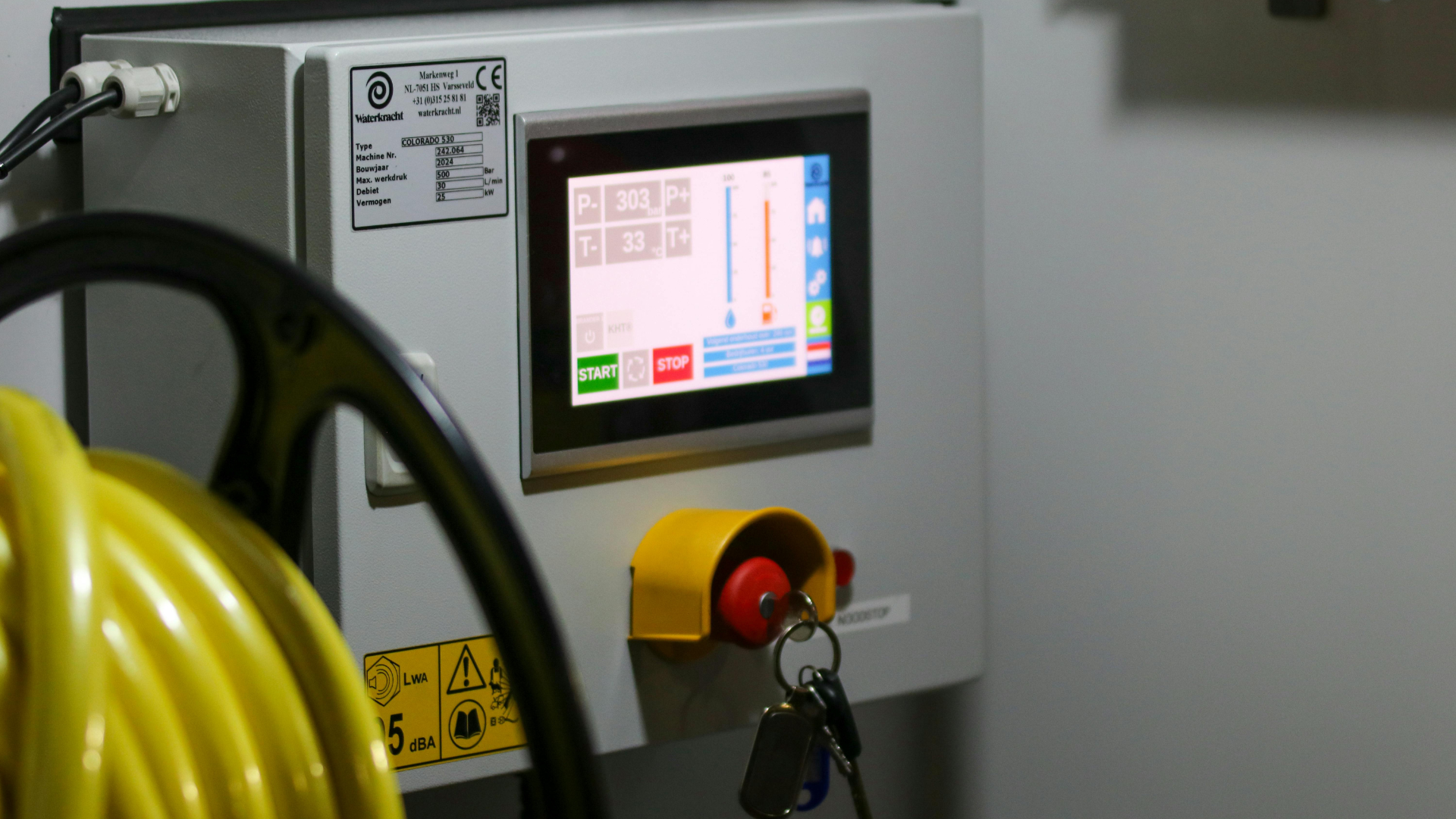
The PLC Upgrade Path That Eliminates Failures Without Shutting You Down
Many think a PLC upgrade is a “rip-and-replace” nightmare that will shutter the plant for weeks. In reality, modern automation is built on surgical precision, not demolition.
A strategic PLC upgrade follows a phased line-by-line, switchover approach.
One zone stabilizes while production runs on another.
No multi-week outages. No frantic teardowns.
Just results that are hard to ignore:
Fewer faults → Clean architecture instead of layered patches.
Faster recovery → Clear alarms and diagnostics.
Less manual intervention → HMIs that guide operators, not confuse them.
So how do you turn that into something the C-suite approves?
You anchor it in a downtime calculator.
To build it, plug in three numbers from your plant:
Downtime minutes per event (from your historian or shift logs).
Cost per minute of downtime (often $1,000–$5,000+ in automotive or pharma).
Frequency of occurrence (that particular failure happens 4x? 12x?).
Then layer in the hidden costs most plants overlook:
Labor impact: maintenance hours spent chasing the same fault.
Emergency parts and rush shipping: for critical replacements.
Vendor support/contractor calls: to get production back online when internal teams can’t resolve recurring issues. In many plants, this item alone can exceed internal overtime costs, especially when issues escalate beyond in-house expertise.
Once the math is done, the result is a bleeding figure your CFO can’t ignore.
What Does a PLC Upgrade Look Like in Dollars (Downtime Calculator Test Run)
A PLC upgrade isn’t an expense. It’s a recovery of money you’re already losing.
Look at the math for a single production line:
Step 1: Current State (The Cost of Patching)
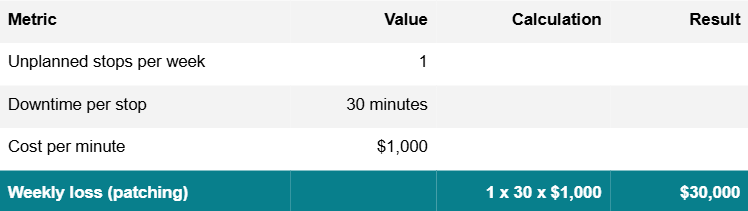
Step 2: Hidden Costs You’re Absorbing
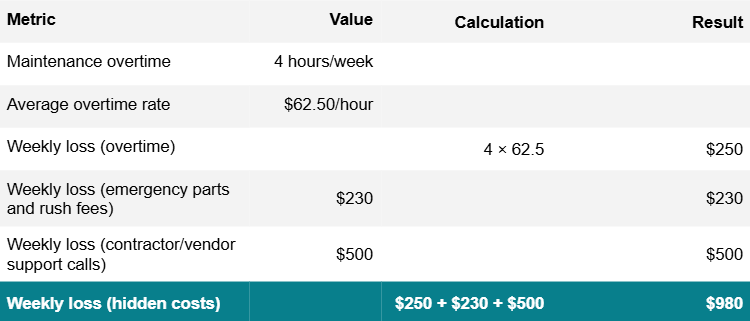
Step 3: Totalize Weekly Losses

Step 4: Upgrade Investment (Single Line)
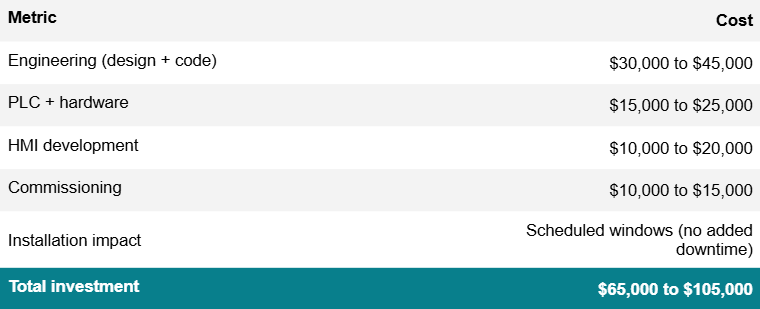
Step 5: Payback Scenarios
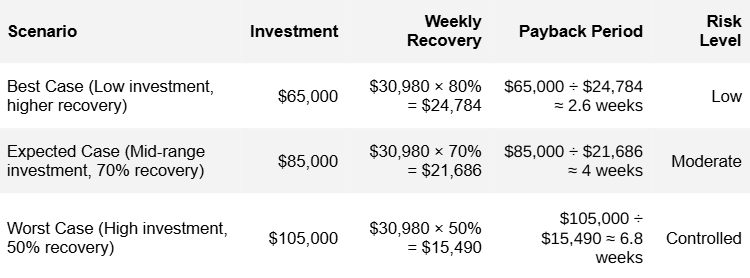
If the upgrade eliminates even half of those downtime losses (worst case), the investment pays for itself in under seven weeks. Every week after that, the plant keeps the ~$31K that used to leak away, without adding a single unit of production.
Cementing The Way From ‘Too Expensive’ to ‘Approved’
When you walk into that CFO meeting, don’t lead with technology.
No hardware lists. No brand names.
Lead with:
“We are currently losing $31k per week due to control instability.”
“A phased PLC upgrade recovers $775k annually.”
“Payback is under 7 weeks.”
“Delaying increases the risk of a major failure event.”
Now you’re not asking for a budget.
You’re presenting a correction.
Position it as controlled:
Phased implementation
Measurable checkpoints
Clear outcomes per phase
After, you’re no longer the person raising problems.
You’re the one quantifying them and solving them.
Take the Next Step
At Verdusco Automation, this is how we structure every engagement. Not around hardware, but around outcomes. We work with your data, your constraints, and your team capacity. The goal is predictability, so you can plan, not react.
The result is a different conversation.
From: “This feels expensive.” To: “Why are we waiting?”
If you want help building your case or validating your numbers, reach out:
📩: maria@verduscoautomation.com
🔗: https://www.linkedin.com/in/raul-automation/
🌐: https://www.verduscoautomation.com/contact
___________________
Final Note:
This article shows what’s possible with a structured PLC upgrade and a clear downtime calculator approach. Every facility is different. A detailed assessment is needed to calculate a precise ROI and define the right path forward.



Before starting up a new automation system, a thorough PLC code review can prevent costly downtime. Learn the five PLC code checks every plant should complete after vendor selection to ensure a stable, maintainable, and reliable commissioning phase.