
Why New Automation Gear Tanked Your Output – Part II
How to Fix the Damage and Reclaim ROI
In Part I, we uncovered how legacy PLC and SCADA integration mistakes create innovation friction when new automation gear (AMRs, cobots, IIoT, or modern protocols) is dropped into aging infrastructure. Hardware limitations, vendor omissions, site constraints, and security restrictions all stack up to destabilize your line.
Now, with Part II, Verdusco Automation shows you how to stabilize your plant without rewiring, long shutdowns, or ripping out legacy systems. The fix is practical, affordable, and proven.
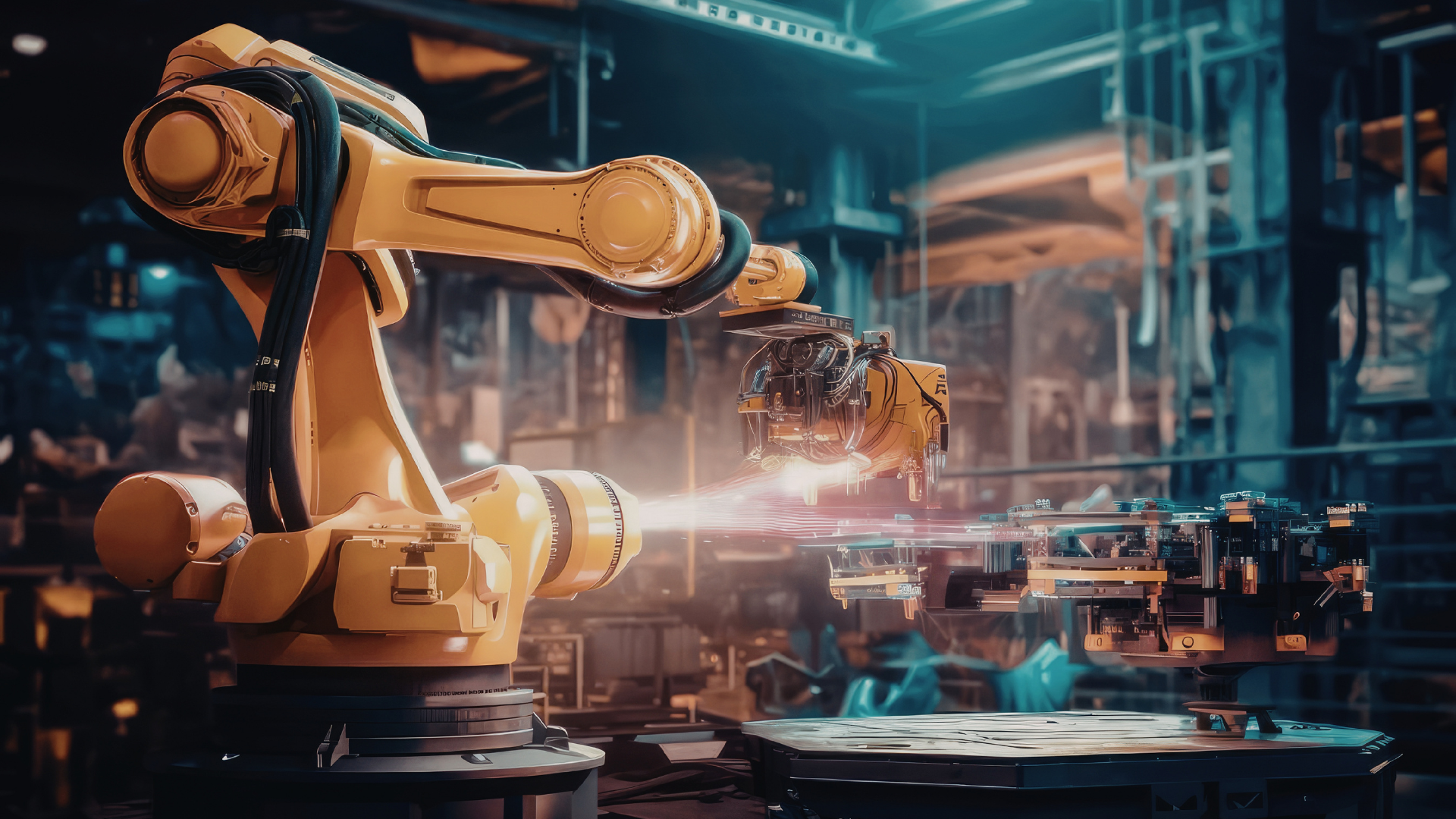
Solving Innovation Friction Between New Automation and Aging Control Architecture
To defeat new automation, PLC, and SCADA integration mistakes, all you need to do is build a communication layer that connects everything into one centralized view.
Here is how a lead tech would approach it:
Map every system and protocol: Document the communication protocol of your automation gears (Modbus RTU, EtherNet/IP, MQTT, OPC-UA, or proprietary).
Find dead zones: Look for machines where operators still type readings into spreadsheets. Those are your targets. An old grinder with no digital pulse. A new robot that reports to no one. These dead zones are exactly where you will focus the next steps.
Install an IIoT gateway: Put a small gateway between the dead zone gear and your network. It translates old serial signals into modern MQTT. It maps proprietary PLC tags to clean names. No plant shutdown needed. The installation takes a weekend.
Standardize tags and scan rates: Clean tag structures and aligned update rates prevent junk values, timing mismatches, and unstable data flow.
Connect everything into one SCADA layer: Point your existing SCADA to the gateway. If your SCADA is too old to handle MQTT, upgrade the SCADA software. Or add a new SCADA layer that sits alongside the old one. Either way, you get one screen showing live motor RPMs from a 2008 PLC right next to the position of a 2026 AMR.
Verify synchronization: Run a shift simulation to watch live status from old PLCs situated beside AMR paths on one dashboard. Tweak gateways if junk values appear.
Notice what you didn’t do:
No rewiring.
No long shutdown.
No ripping out legacy systems.
Just communication restored.
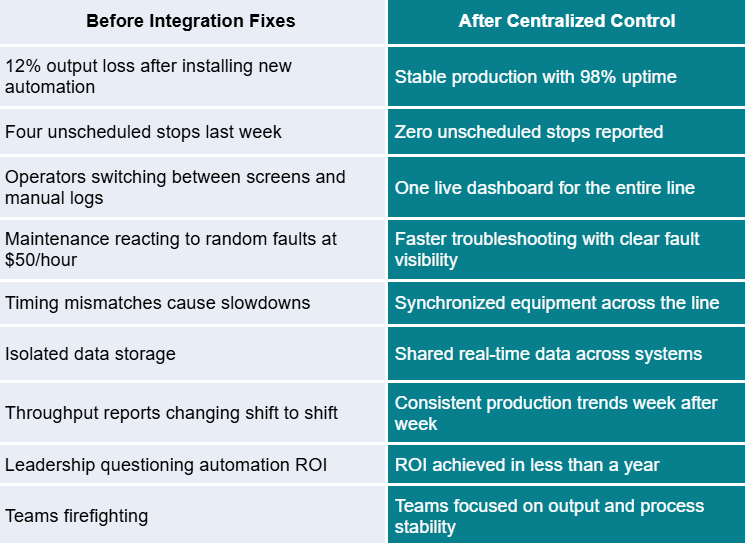
What Happens to ROI After Fixing Innovation Friction
The difference becomes obvious once disconnected systems start communicating through one centralized PLC/SCADA/IIoT layer.
Stabilize Your Line Now
Now that you understand what’s been holding your automation back, you can:
Take control of your line again.
Build a communication layer that unifies PLCs, robots, IIoT, and SCADA.
Eliminate guesswork and stop firefighting.
Give your team the stability they’ve been missing.
What comes next?
Enlisting an automation partner who understands your challenges and the entire integration process.
Verdusco Automation supports you in this quest by performing:
Centralized Control Layer Development: Connect legacy PLCs, new automation, and SCADA into one unified architecture.
IIoT Gateway Integration: Bridge old and new systems with clean, modern data flows and standardized tags.
SCADA Modernization & Visibility Upgrades: Give your team one live dashboard with real‑time insights across the entire line.
If you’re dealing with new automation issues or suspect SCADA integration mistakes are behind your instability, this is the moment to act. Your line can be stable again and the ROI is real.
Contact us today for a no-cost line review chance.
📩: maria@verduscoautomation.com
🌐:verduscoautomation.com/contact
_____
Note: This article shows what’s possible when integration is handled correctly. But every facility has its own constraints, legacy quirks, and communication gaps. A custom analysis is required to calculate your exact ROI and design the right communication layer.

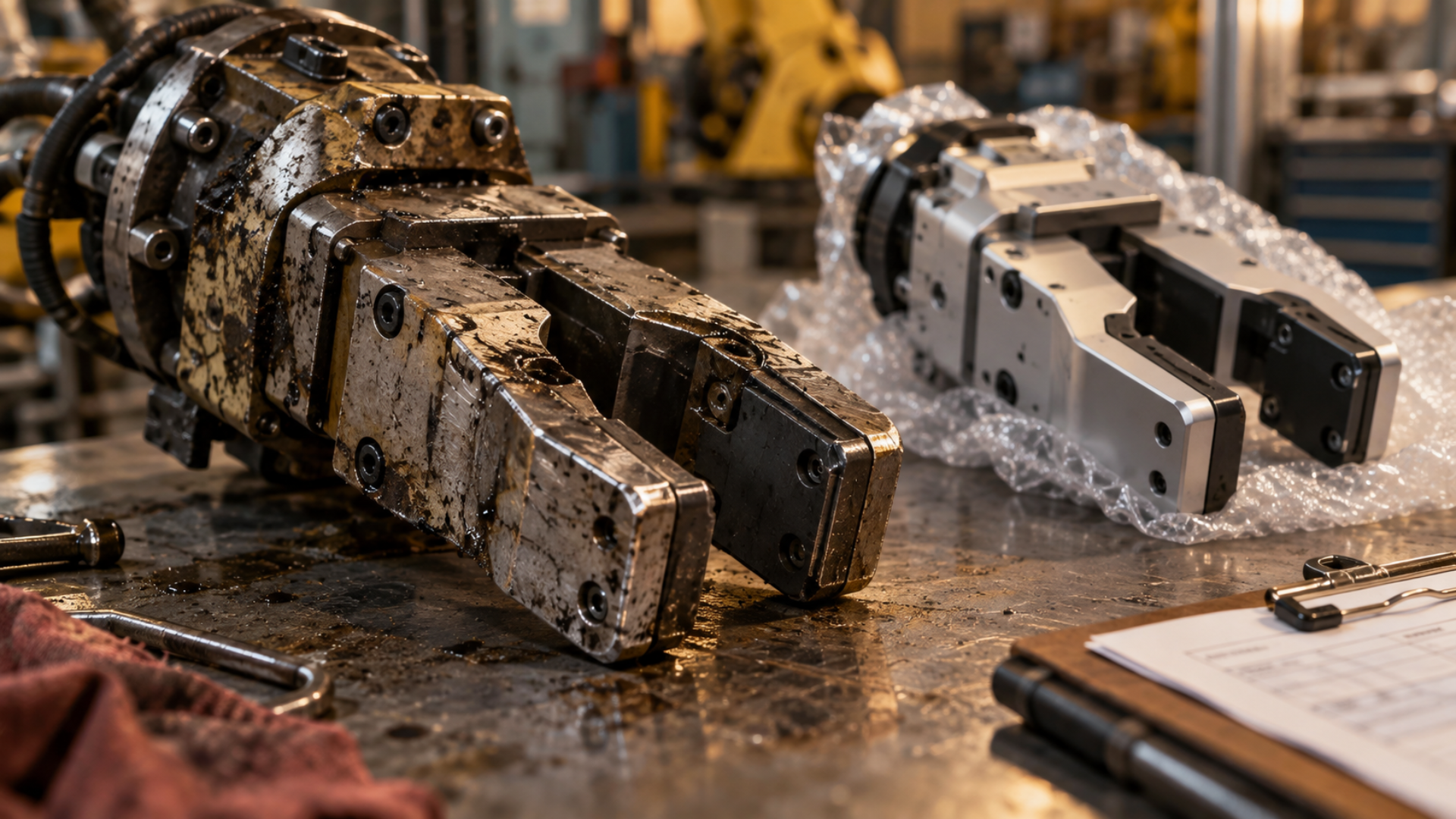

Aging conveyors don't always need full replacement — often the mechanical structure is sound and only the controls are outdated. Discover how a control system retrofit with VFD motor control and smart sensors can cut downtime, reduce damage, and deliver payback in months.