
How to Catch Deburring Tool Microstops in Real Time (Before They Slow Production)
The deburring cell runs steadily. No alarms. No long stops.
Yet output is off, scrap is creeping up, and no one can explain why.
By the time reports come in, it’s too late to act.
This Verdusco Automation article shows how automation visibility solutions expose hidden losses so you can fix them without adding extra work to your team.

The 10-Second Stops That Add Up to Hours
The deburring tool sputters for a few heartbeats, then resumes moving and cutting.Operators notice the hiccup and move on.
Those 10‑ or 20‑second pauses never get logged as downtime, because the shift report (whether on paper, a whiteboard, or a spreadsheet) only captures stops longer than ten minutes.
In reality, when a tool pauses twenty times an hour to clear a tiny bit of debris or because of a slight sensor misalignment, you can lose around 15% of performance before lunch. You see it in
inconsistent edges,
a scrap bin that grows faster than it should,
longer cycle times,
and tooling that wears out early from repeated micro‑impacts.
The real sting?
Without real visibility, teams can’t see these microstops piling up. They just feel the frustration of unexplained slowdowns.
Has it happened to you?
It’s time to stop chasing deburring ghosts and start seeing what’s really happening.
Catching Microstops Without Stressing Your Team
Factories now use automation visibility solutions to monitor production in real time, without piling extra tasks onto operators.
In deburring, the process starts by instrumenting the cell so that tiny changes in spindle load, cycle time, or vibration are captured by the control system.
Every time the tool hesitates, even for 5 seconds, the system records it automatically. No extra buttons. No manual logs. The data gathered flows into a real-time dashboard tied into your PLCs, sensors, and SCADA or HMI layer.
Instead of flipping through handwritten notes or chasing stories from the last shift, you glance at one screen and see a clear timeline of the shift:
When did the tool slow down?
How often did it happen?
Where were the microstops clustered?
The change is immediate. Microstops appear as color‑coded, time‑stamped interruptions that are impossible to ignore or explain away.
Within hours, teams start seeing patterns they could never prove before. By the end of the first week, it’s common to catch the primary cause of a major performance loss. In most plants, the root causes are not exotic. They usually come down to a slightly misaligned fixture, inconsistent coolant flow (once the tank warms up), or a tool material that wears faster than the process demands.
What Changes When You Can See Every Deburring Tool Microstop
Let’s put numbers to what’s been invisible.
Before adopting automation visibility solutions, a deburring cell might appear to run 80% of the time based on shift reports. But microstops quietly eat around 15% of the effective runtime, meaning lost parts, overtime to catch up, extra tooling, and rework are always there, active, draining your bottom line.
Visibility changes everything!
Plants typically cut microstop‑related loss by 80% within the first 60 days. Simple fixes, like aligning a fixture, adjusting coolant, or tightening a clamp, restore throughput without capital expense.
Here’s what it looks like for a plant with three deburring cells:
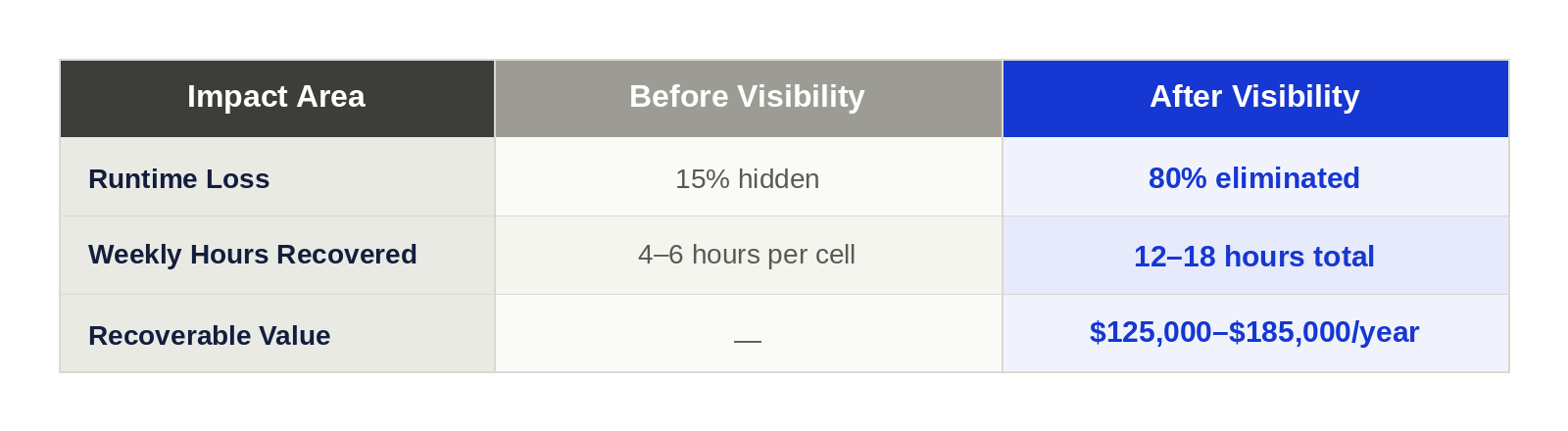
At a burdened line cost of $150/hour, the visibility system often pays for itself in under six months.
And beyond the numbers, you also see:
Tool life increases.
Rework drops.
Output rises, without adding headcount.
When the scrap bin stops filling so fast, and the overtime budget starts dropping, the shop conversation shifts from “What happened?” to “We fixed it.”
From Frustration to Control: Who to Call When You’re Ready to See the Invisible
Once you see where microstops come from, the next step is simple: Make them visible. Then eliminate them.
With the right support, you can:
See every interruption in your deburring tool in real time
Identify root causes within days, not weeks
Improve output without adding headcount or complexity
Verdusco Automation helps manufacturers reach that point without overwhelming their teams. As an experienced automation integrator, here’s how they support that shift:
Real-Time SCADA Dashboards: Clear, simple interfaces that show machine performance as it happens. No data overload.
Production Monitoring & OEE Tracking: Accurate measurement of downtime, including microstops, so decisions are based on facts.
Integrated Automation Solutions: Sensors, controls, and software working together to capture and act on real-world conditions.
If your deburring cell “looks fine” but feels off, this is where to start.
Contact Verdusco Automation through your preferred channel:
📩: maria@verduscoautomation.com
🔗: https://www.linkedin.com/in/raul-automation/
🌐: https://www.verduscoautomation.com/contact
____________
Final Note: This article shows what’s possible, but every facility is different. A custom assessment will give you a precise ROI and a clear roadmap. And it’s easier than you think!

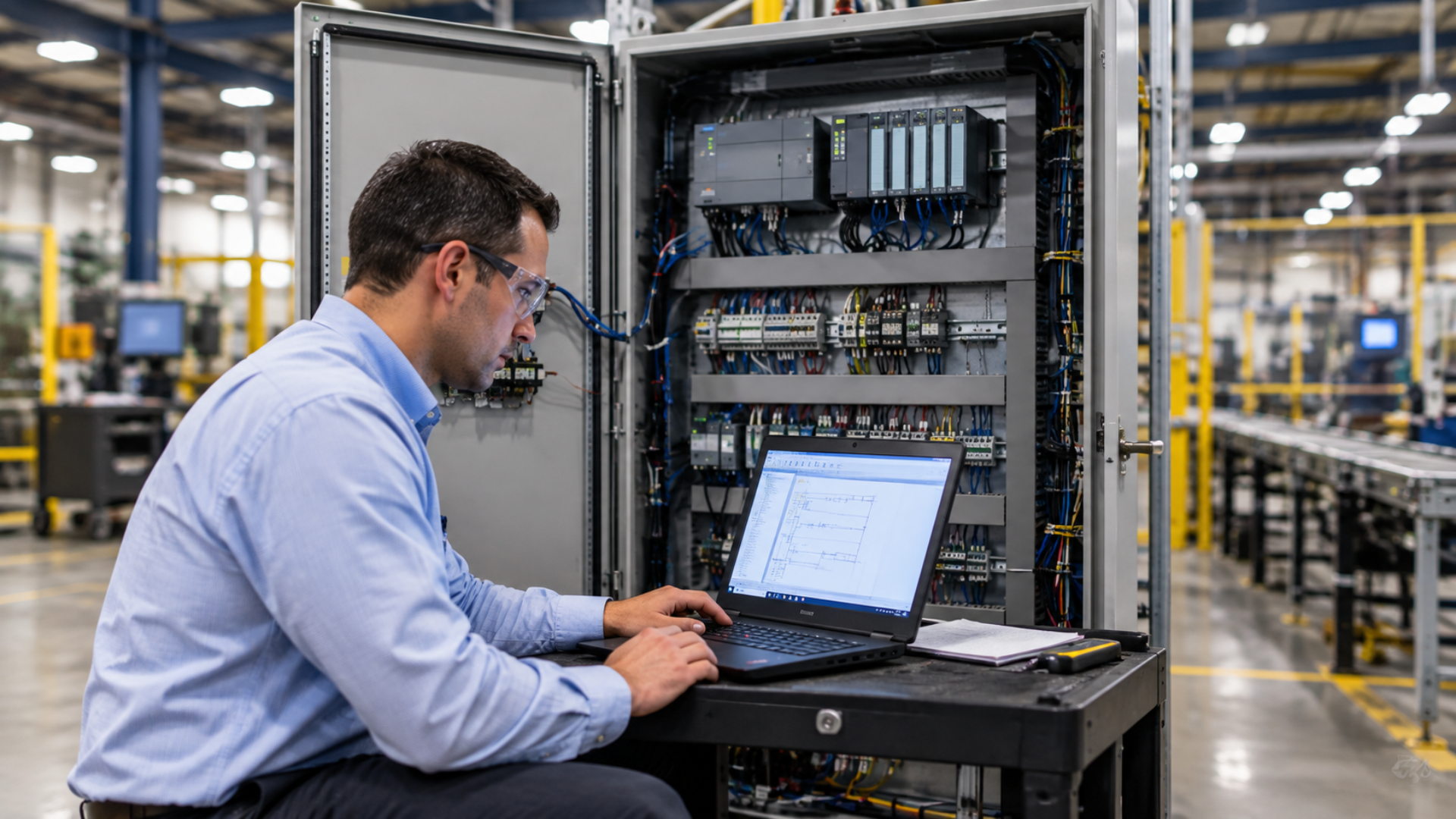

Recurring automation failures can quietly drain over $15,000 a year from your plant's budget. Learn how a structured decision tree helps your team decide when to repair, replace, or redesign a failing component and finally break the cycle.