
How AI Programming Gives New Life to Legacy PLC and Robotics in Manufacturing Plants
Look at your current automation system. Now answer these questions:
Do rigid, hardcoded robotics programs demand your engineers’ constant presence to reteach points, offsets, or entire sequences whenever something shifts?
Does PLC logic built for stability force your maintenance team to chase false trip faults caused by normal process variation?
Does the lack of real‑time feedback keep everyone making manual corrections after problems appear?
If you answered “yes” to even one, this Verdusco Automation article is for you.
You’ll see how AI programming can work with your existing PLC and robotics systems to reduce manual updates, stabilize production, and help your facility evolve without a costly overhaul.
Let’s begin.
3 Ways AI Programming Removes Manual Interventions from PLC and Robotics Systems (WITHOUT a Costly Retrofit)
In the past, manufacturing automation upgrades were tied to ripping out old hardware. It was expensive, complex, and easy to postpone.
That reality has changed.
Today, even dated PLC and robotics systems are seeing new life when paired with an AI copilot that helps them adapt.
Below are three real‑world use cases showing how AI programming enhances the PLC and robotics systems you already own.
Use Case 1: Autonomous Tuning of Welding and Joining to Material Variability
In a standard setup, if a metal sheet is slightly warped or a seam is off by even 0.5–1.0 mm, the weld can fail, or worse, the robot can crash.
The fix is usually manual: a programmer steps in, tweaks offsets, and reruns the cycle. On a busy line, that can mean 15–30 minutes of downtime per adjustment, repeated multiple times per shift.
With AI programming, that loop changes.
3D vision sensors “see” the gap. The AI calculates the deviation and adjusts the robot’s path and voltage in real time. The PLC still executes the command, but the AI ensures the torch lands where the metal actually sits, not just where the CAD model says it should be.
In practice, plants see first-pass yield improvements of 10–20% on variable parts and a sharp drop in rework. The result is consistent quality, fewer defects, and less downtime.
Look at this case study for real-world evidence of how an AI-based generative programming improves the quality of welded joints.
Use Case 2: Auto-Adapting Robotic Handling According to Position and Geometry Changes
If you run a logistics warehouse or a processing line, you know traditional pick-and-place robots tend to error out when a box is skewed.
Parts don’t arrive in neat rows. A 5–10° rotation or a 1–2 inch offset is often enough to trigger a fault.
Each stop might only take 2–5 minutes to reset, but when it happens 10–20 times per shift, it quietly drains hours of production.
By layering AI over the system, the robot learns to recognize the shape and orientation of each object. It adjusts its grip on the fly, eliminating the “nuisance stops” that force maintenance teams to constantly intervene.
A recent MIT research in warehouse logistics supports this shift. Using deep reinforcement learning to coordinate robot paths in dynamic environments led to a 25% gain in throughput because decisions are made in real time, not locked into static PLC logic.
Use Case 3: Self-Adjusting Finishing Processes
Grinding and deburring are inherently inconsistent processes.
As tools wear down, even within a single shift, force output can drift by 10–15%, leading to uneven finishes, scrap, or secondary rework.
Traditionally, operators compensate manually or wait until quality issues appear.
AI introduces a continuous feedback loop.
Using force-feedback data, the system “feels” the resistance of the material. If the tool begins to dull, it automatically compensates, maintaining consistent pressure and finish quality in real time.
In many cases, this reduces scrap from 8–12% down to 3–5% and extends consumable life by 20–30%. You get longer tool life, lower scrap rates, and less rework at the end of the shift.
For real-world evidence, check the news about ABB’s grinding robot.
Before-and-After Gains From AI Programming in PLCs and Robotics
When discussing new technology with CEOs and CFOs, the conversation eventually shifts to the bottom line.
And rightly so.
Here’s what AI programming looks like in practical terms:
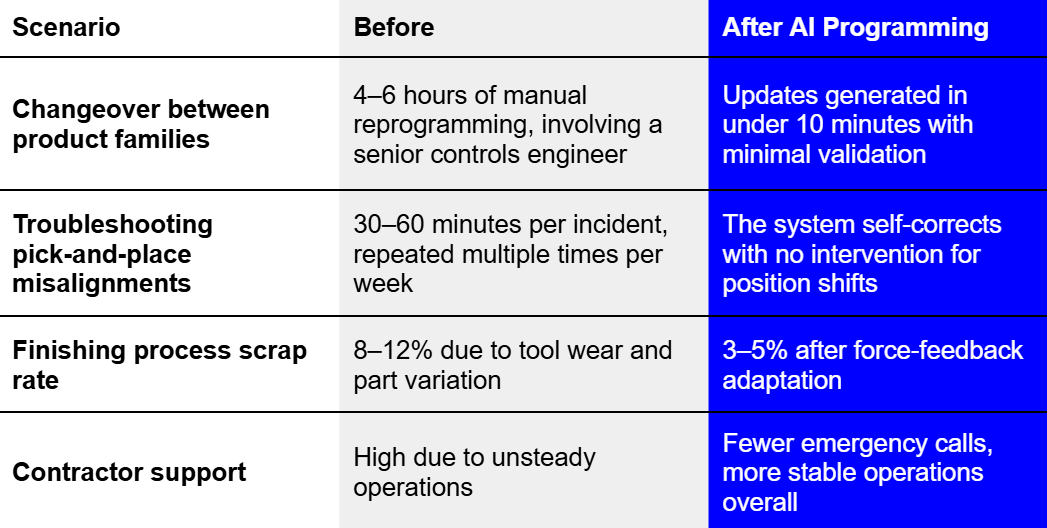
Other impacts:
Labor. AI programming frees senior programmers to focus on process improvement, preventive maintenance, and scaling automation.
Capital. AI programming extends the life of older PLC and robotics systems. Your existing controllers can run for years longer, delaying major capital investments.
Even saving 30–60 minutes per shift compounds quickly. For a plant running three shifts, that’s 15–30 hours per week of recovered production or maintenance capacity.
Applying AI Programming in Your Existing PLC and Robotics Legacy Systems
Start small.
Identify a single process where variability disrupts production the most:
Welding cell: measure weld consistency.
Handling station: track misalignment or pick errors.
Finishing operation: monitor scrap rate or cycle force.
Implementation becomes straightforward when you layer AI over what’s already in place:
Connect your existing PLCs, robotics, and sensors.
Introduce AI where variability causes delays or defects.
Validate results, then scale.
If you’re evaluating ways to reduce manual updates or extend the life of your PLC and robotics systems, start with one application. The results often arrive faster than expected.
Verdusco Automation acts as an automation integrator for legacy systems, bridging PLCs, robotics, vision systems, and AI capabilities inside your current operations. No rip-and-replace required.
To get support, reach us through your preferred channel:
📩 maria@verduscoautomation.com
🔗Connect with Raul on LinkedIn
___________
Final Note: This article illustrates what’s possible. A precise ROI calculation requires a custom review of your facility, your equipment, and your production goals.
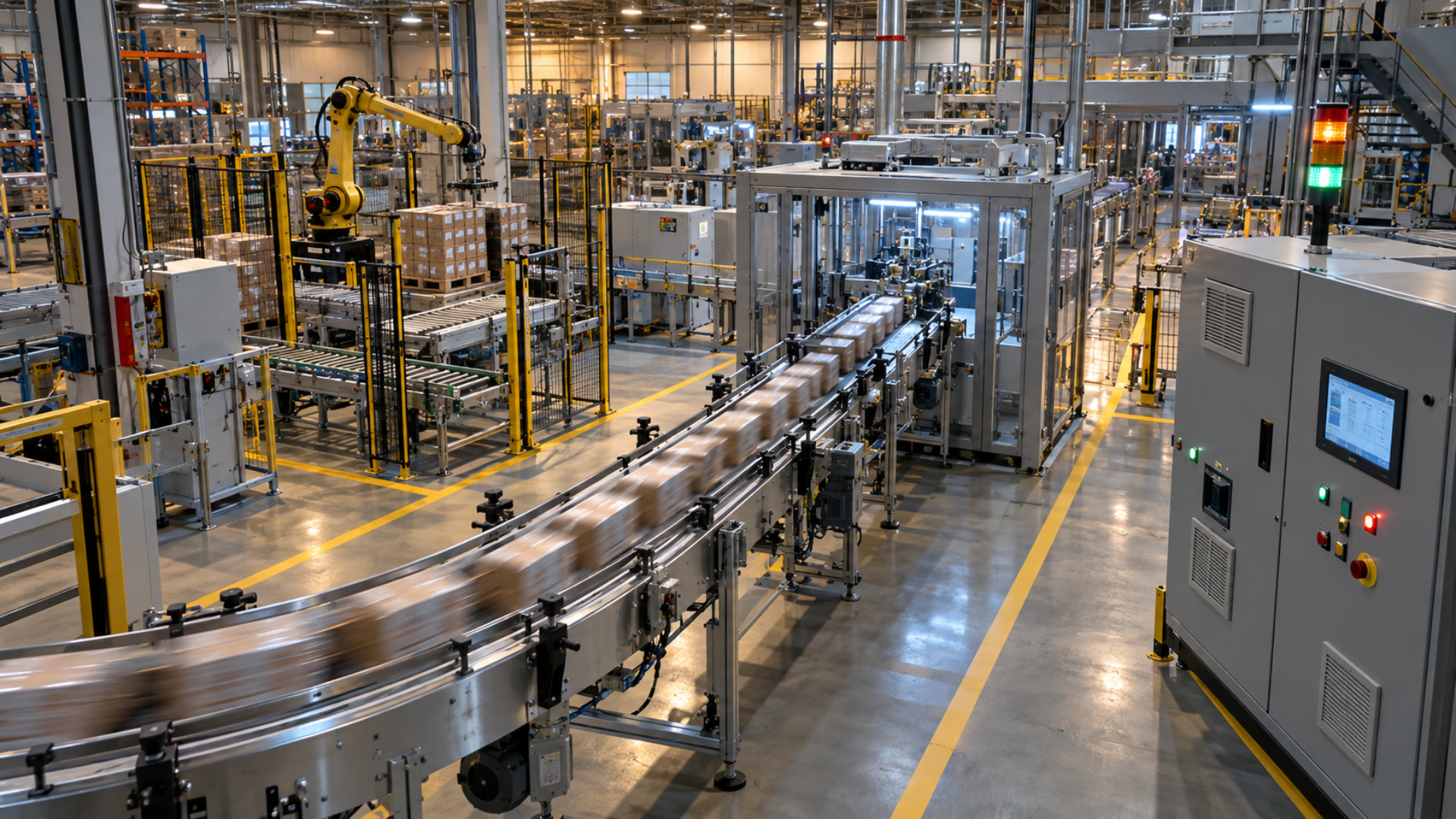
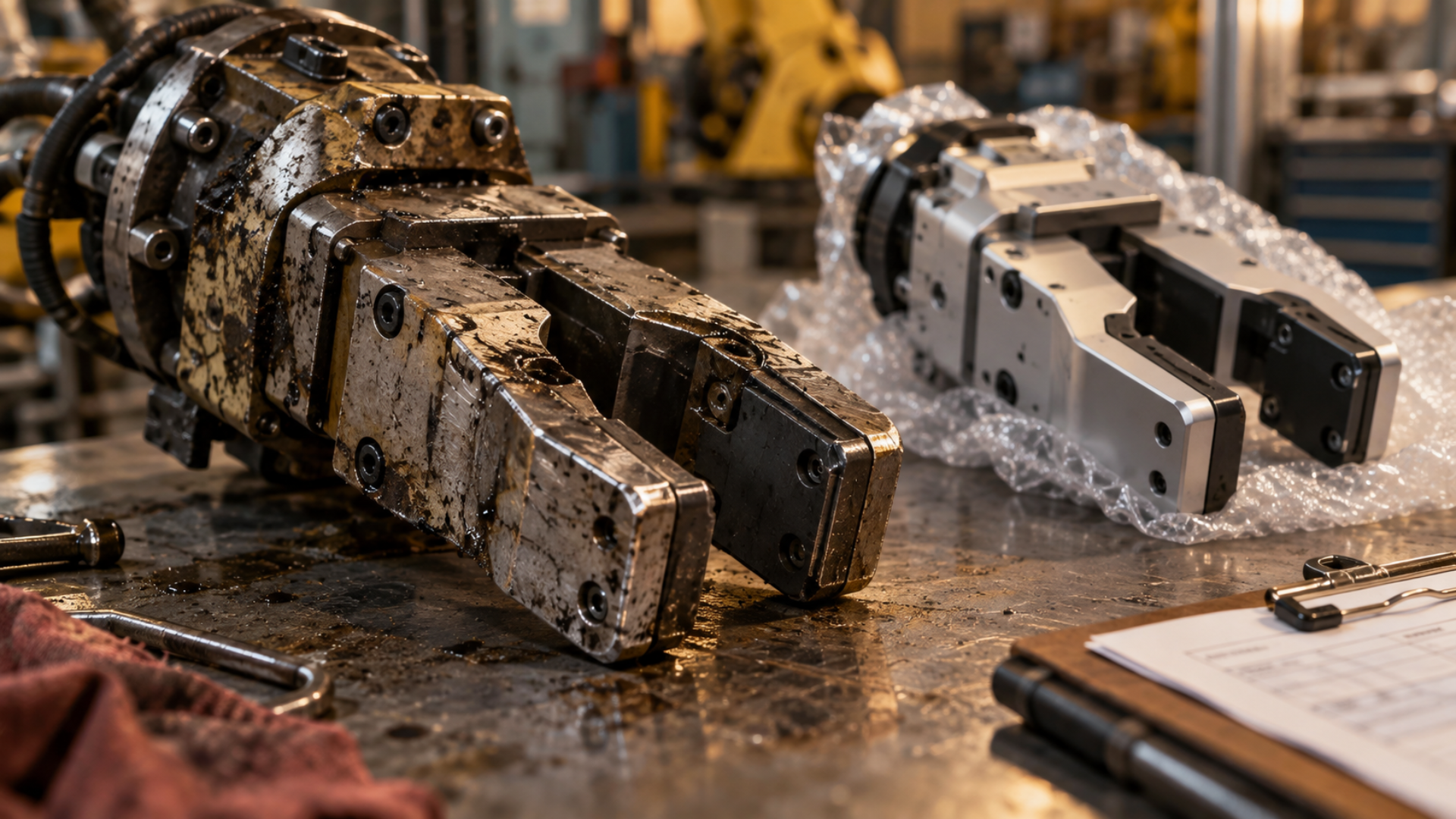

Aging conveyors don't always need full replacement — often the mechanical structure is sound and only the controls are outdated. Discover how a control system retrofit with VFD motor control and smart sensors can cut downtime, reduce damage, and deliver payback in months.