
35,000 Injuries a Year. Here’s How Autonomous Forklifts Are Changing That Story Across America
Every plant leader carries the same responsibility: keep people safe while keeping production moving. But many facilities still rely on forklift workflows designed decades ago.
Forklifts remain the backbone of industrial logistics. They move pallets, stage materials, and keep production supplied. But they also introduce risk across the facility. In the United States alone, forklift incidents lead to about 35,000 serious injuries per year, putting constant pressure on safety teams and pushing the OSHA incident rate in the wrong direction.
This Verdusco Automation article explains how autonomous forklifts are helping plants eliminate the root causes of those injuries while bringing stability and control to material flow.
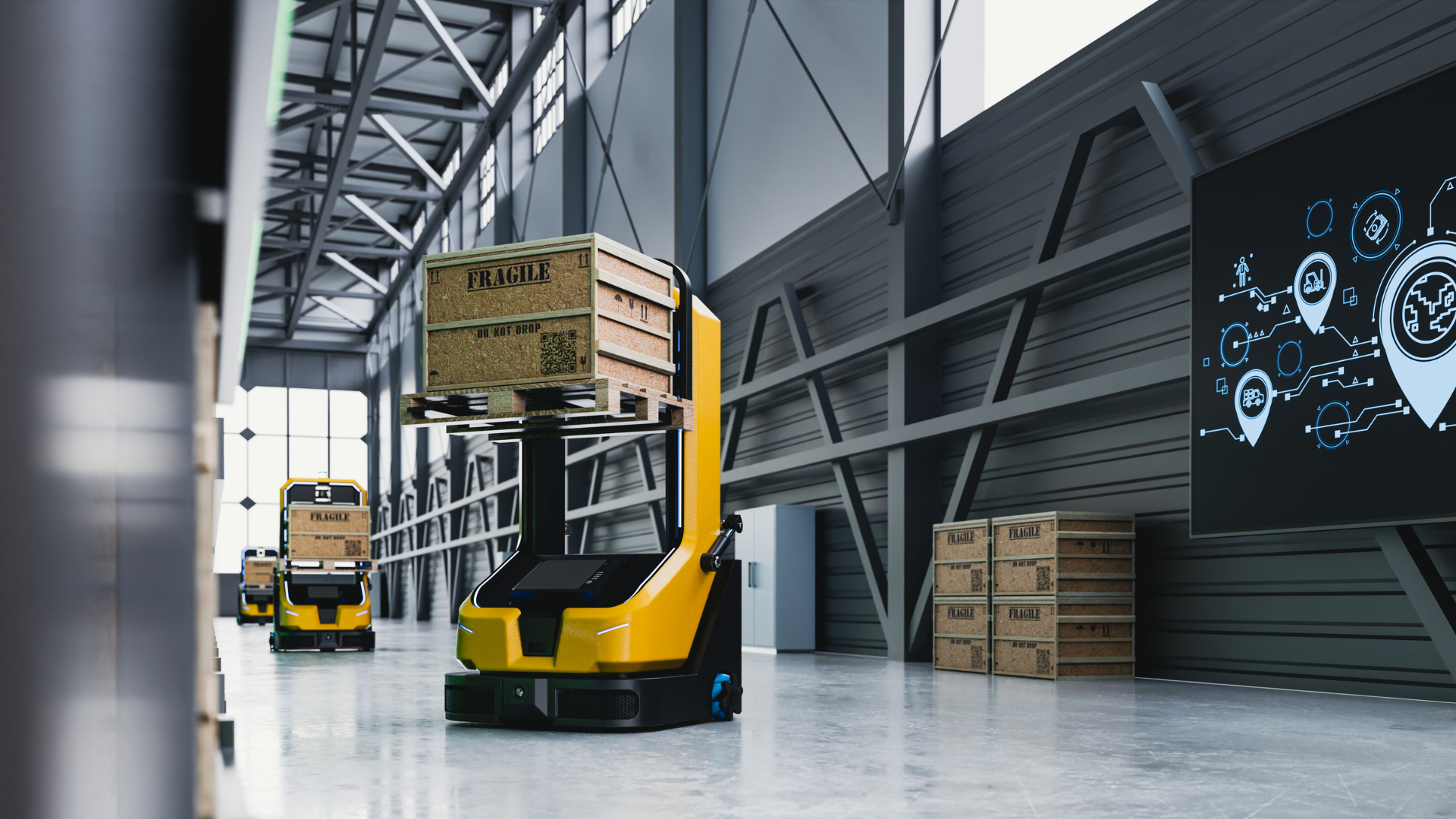
Why Forklift-Dependent Material Flow Is Exposed to a Higher OSHA Incident Rate
Tight aisles and blind corners.
Mixed traffic between pedestrians and vehicles.
Shifting priorities during peak production.
The causes behind most forklift incidents aren’t dramatic. They are ordinary conditions on a busy plant floor.
Still, according to the Occupational Safety and Health Administration (OSHA), forklifts contribute to 1 in 6 workplace fatalities in the United States.
Is operator skill the main factor?
Partially.
New hires often struggle with load balance, braking distance, or spatial awareness. But experienced operators face another challenge: fatigue. After hours of repetitive driving, a slow reaction or a drifting attention is enough to trigger a chain reaction:
OSHA recordables.
Workers’ compensation claims.
Higher insurance premiums.
Halted production during investigations.
The floor may look normal again after a few days. But the OSHA incident rate quietly climbs in the background.
Ten years ago, most plants had no choice but to live with this risk.
Today, that assumption is starting to change.
How Autonomous Forklifts Remove the Conditions That Cause Most Incidents
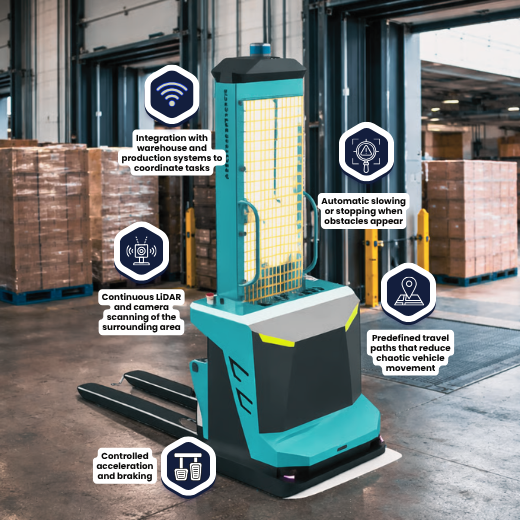
Autonomous forklifts are designed to address the recurring conditions behind most incidents.
LiDAR, cameras, and onboard software are built in to understand surroundings and navigate facilities using a digital map. Instead of relying on moment-to-moment human judgment, the vehicle follows defined routes and operating rules.
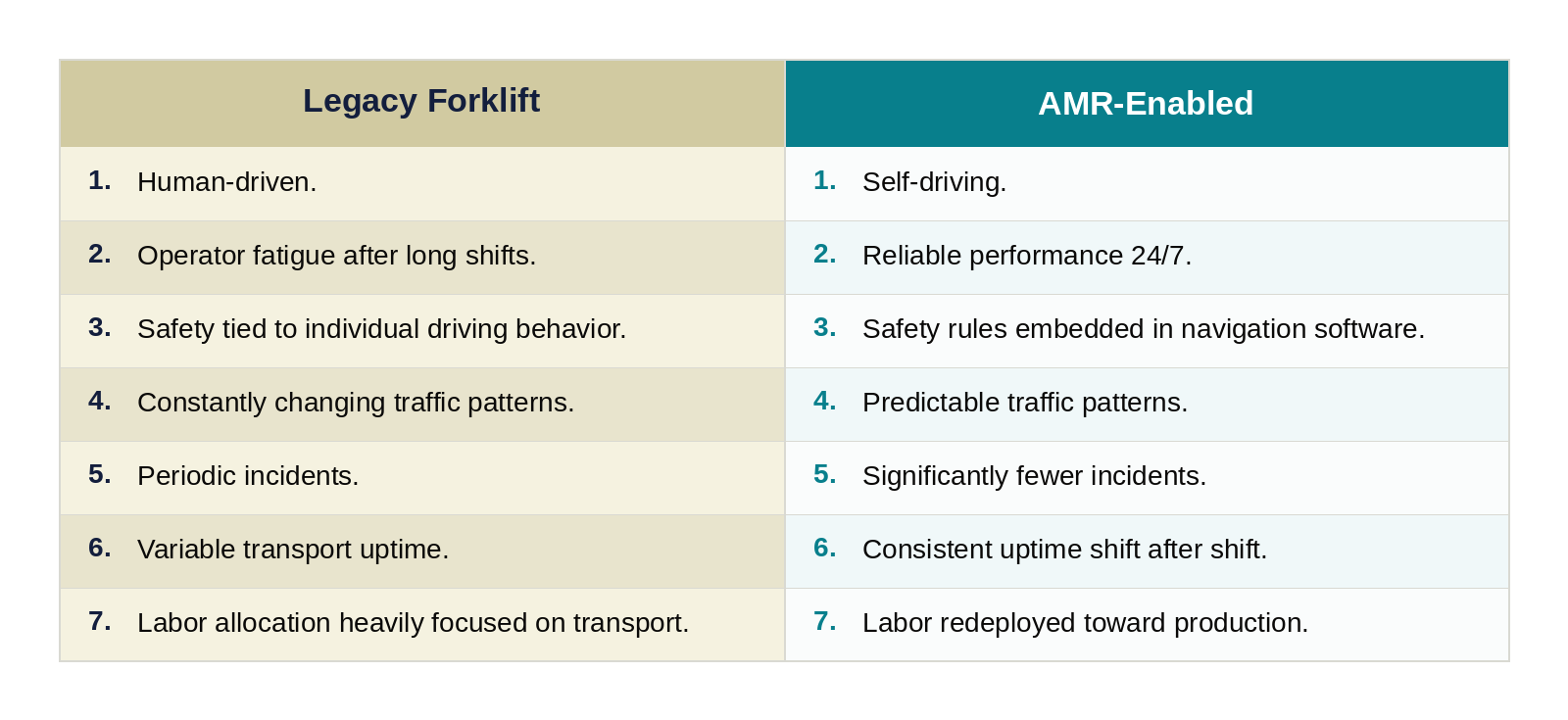
While human-driven forklifts depend heavily on training, attention, and shift conditions, autonomous forklifts rely on consistency. They perform the same transport task the same way, every time.
The difference becomes clearer when comparing the two systems:
What Happens to Forklift Operators?
They no longer drive pallets back and forth all shift long. And often move into other roles such as:
Machine operation or line support.
Staging and quality checks.
Kitting or assembly support.
Maintenance assistance.
Production logistics coordination.
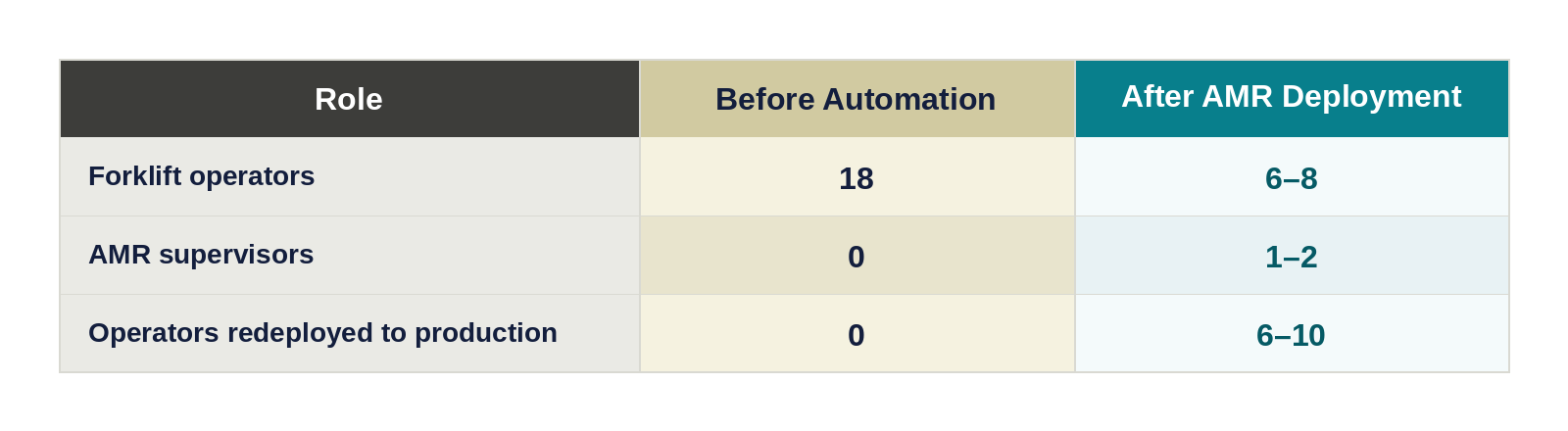
A typical workforce transition might look like this:
As Henry Ford once said:
“Quality means doing it right when no one is looking.”
Autonomous forklifts bring order to a process that has long depended on constant attention.
The Next Safety Milestone in Manufacturing and Warehousing
Forklifts will always play a role in industrial operations. But most facilities still rely on workflows designed decades ago, long before modern automation tools existed.
Today’s plant leaders have a different opportunity.
By introducing autonomous forklift systems into repeat transport routes, they can reduce their OSHA incident rate, modernize material flow, and increase throughput without expanding headcount. The most successful deployments start with a careful automation strategy. That means:
Mapping current material movement.
Identifying repetitive transport routes.
Integrating autonomous systems into existing production workflows.
This is where experience matters.
Verdusco Automation works with manufacturers and logistics operators to design practical automation systems that fit real production environments.
Our services include:
Autonomous Mobile Robot integration for pallet transport and logistics.
Industrial automation design and engineering tailored to each facility.
Control systems integration that connects robots with production and warehouse platforms.
The goal is simple:
Safer operations, stronger productivity, and teams freed from repetitive transport work.
If you’re exploring how automation could improve your facility, contact Verdusco Automation through your preferred channel:
🔗: https://www.linkedin.com/in/raul-automation/

Recurring automation failures can quietly drain over $15,000 a year from your plant's budget. Learn how a structured decision tree helps your team decide when to repair, replace, or redesign a failing component and finally break the cycle.