
How to Retrofit a Legacy Allen-Bradley PLC Without Dropping Production for a Week
Manufacturers keep legacy PLCs running long past their prime.
Not out of confidence, but out of caution.
So, when an upgrade request arrives, the same questions always follow:
How much downtime?
What could break?
Will production be impacted?
The good news is that a retrofit project does not have to mean a week of lost production.
With planning, testing, and phased execution, many control system upgrades can be completed with far less disruption than most teams expect.
This Verdusco Automation article delivers practical steps to upgrade a legacy Allen-Bradley PLC while keeping production in motion.
Let’s start with why these projects go off track in the first place.
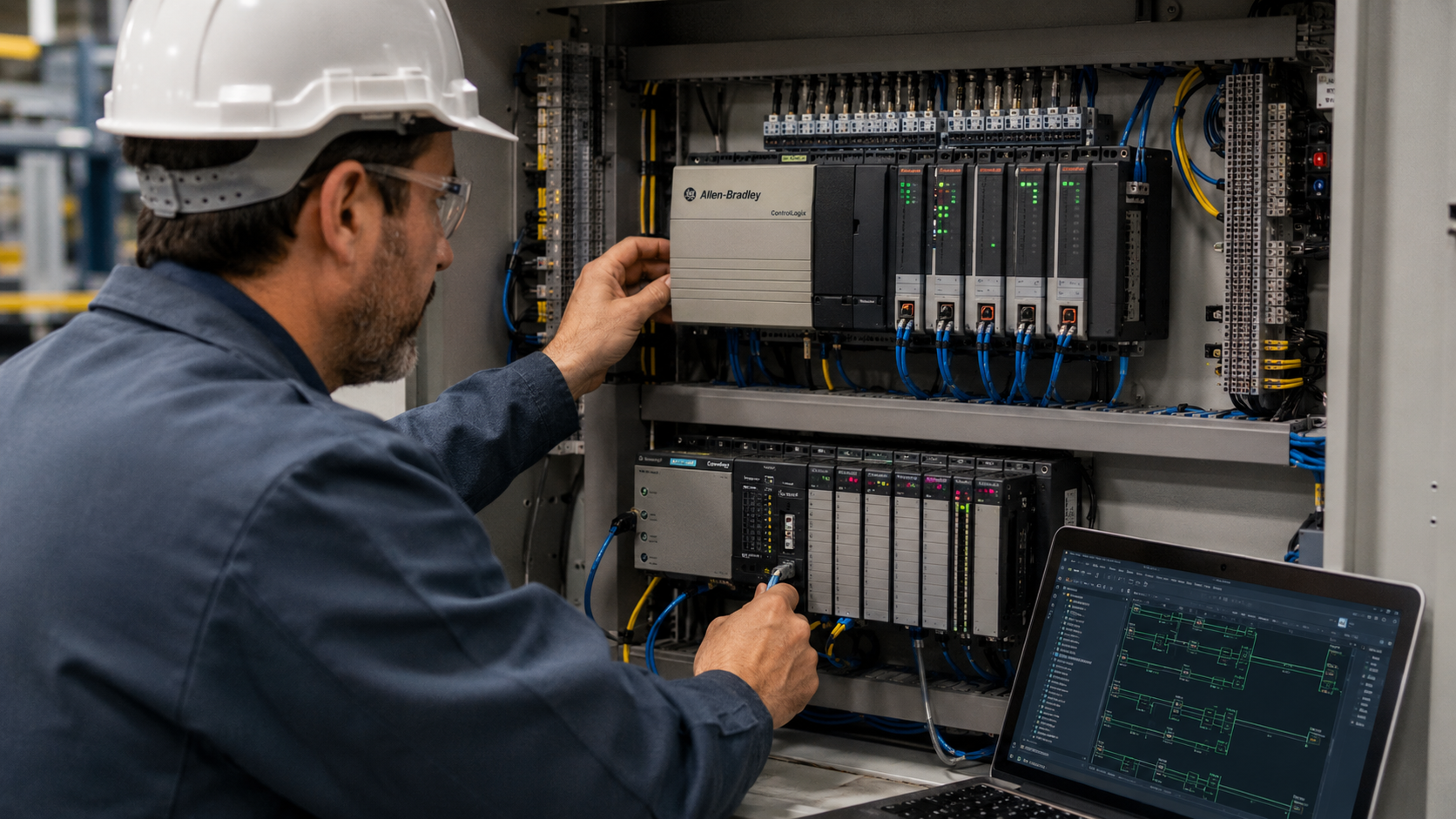
Why Most PLC Retrofit Projects Take Longer Than Necessary
Most PLC retrofits slip not from hardware failure but from planning gaps that surface too late.
Whether the system is built on Allen-Bradley, Siemens, Schneider, Mitsubishi, or Omron, the same issues tend to surface:
Undocumented logic changes introduced over the years by different engineers.
Obsolete communication protocols that require translation or replacement.
Specialty modules with no direct modern equivalent.
Field devices with timing dependencies that no one remembers.
In Allen-Bradley environments specifically, one of the biggest surprises is the shift from fixed-address I/O (legacy systems) to tag-based architecture in modern ControlLogix platforms.
Without a clear plan, teams spend shutdown time manually mapping legacy I/O addresses to new tags while the line sits idle.
That’s when a planned three-day upgrade turns into a two-week recovery effort.
Keeping Your Allen-Bradley PLC Retrofit Project From Slipping Into Downtime Risk
The most effective way to protect your production schedule is simple: move all high-risk work offline.
Set up the controller in a lab or quiet corner of the plant.
Wire a test rack and load the translated logic.
Simulate field inputs and force outputs to verify responses.
Run full sequences end-to-end and test every alarm and interlock.
Let the system cycle under real timing conditions for hours (not minutes).
For an SLC 500 replacement, you can build a separate ControlLogix migration environment with simulated I/O that mirrors real plant behavior. For Siemens, Schneider, or other platforms, the same principle applies: validate behavior, not assumptions.
Only when the new system performs step-for-step like the original should it be introduced to live production.
Running a parallel test phase is an extra step you can take to eliminate the surprises that lead to extended outages. When done right, the upgrade delivers a controlled cutover with no measurable impact on production rate, quality, or operator workflow.
Early Steps to Reduce Downtime During a PLC Retrofit
Follow these practical (and repeatable) steps for tighter results in your PLC retrofit project:
Audit before you act: Verify real I/O, trace wiring, print logic, and capture undocumented workarounds. Never rely solely on legacy drawings.
Build and prove offline: Stage the new PLC and rack, translate the code, and simulate inputs/outputs in a lab until behavior is completely repeatable.
Phase the cutover: Upgrade one cell, conveyor, or function at a time. Validate each segment thoroughly before proceeding.
Keep rollback ready: Leave the legacy CPU mounted and a clean backup available for an instant, 10-minute revert if needed.
Quick Note: If migrating fixed-address I/O to tag-based platforms (like moving from SLC 500 to ControlLogix), pre-map and validate translations in the lab. This step alone avoids the most common multi-day plant delays.
Modernize Your Control System Without Major Shutdown Events
Verdusco Automation aligns with your vision.
We back your team with staged upgrades and offline validation so you can modernize controls without taking a week out of production. The result is a controlled transition that improves reliability without sacrificing output.
If your current system is being held together by temporary fixes, it may be time to take a more structured approach.
Let’s talk about ending the patches and building a reliable floor for your next chapter.
Contact Verdusco Automation:
📩: maria@verduscoautomation.com
🌐:verduscoautomation.com/contact
______
A Final Note: Control architectures, network design, and operational constraints vary from plant to plant. The principles outlined here provide a proven framework, but a successful retrofit always starts with a detailed, on-site assessment and a tailored migration strategy.
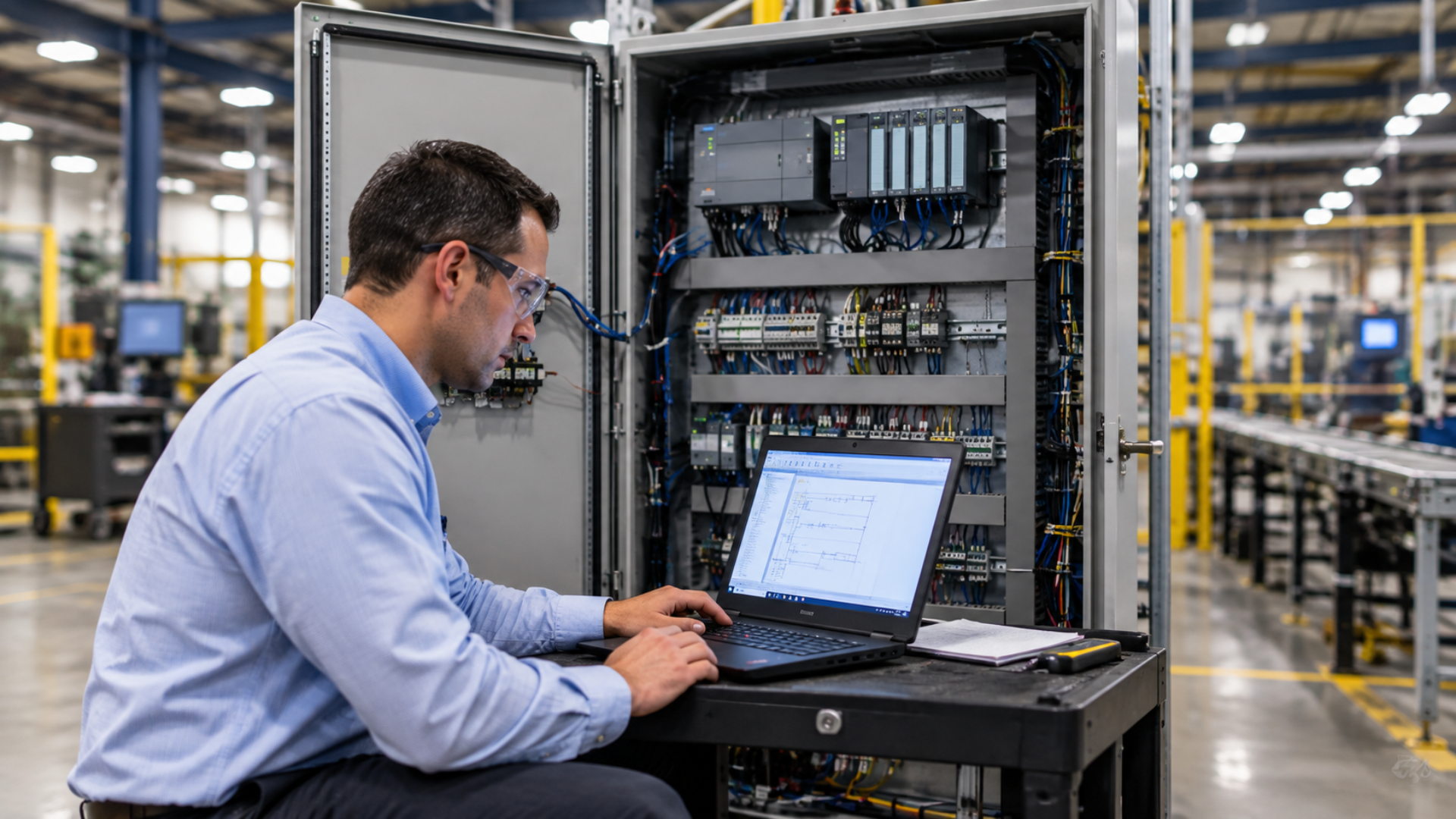
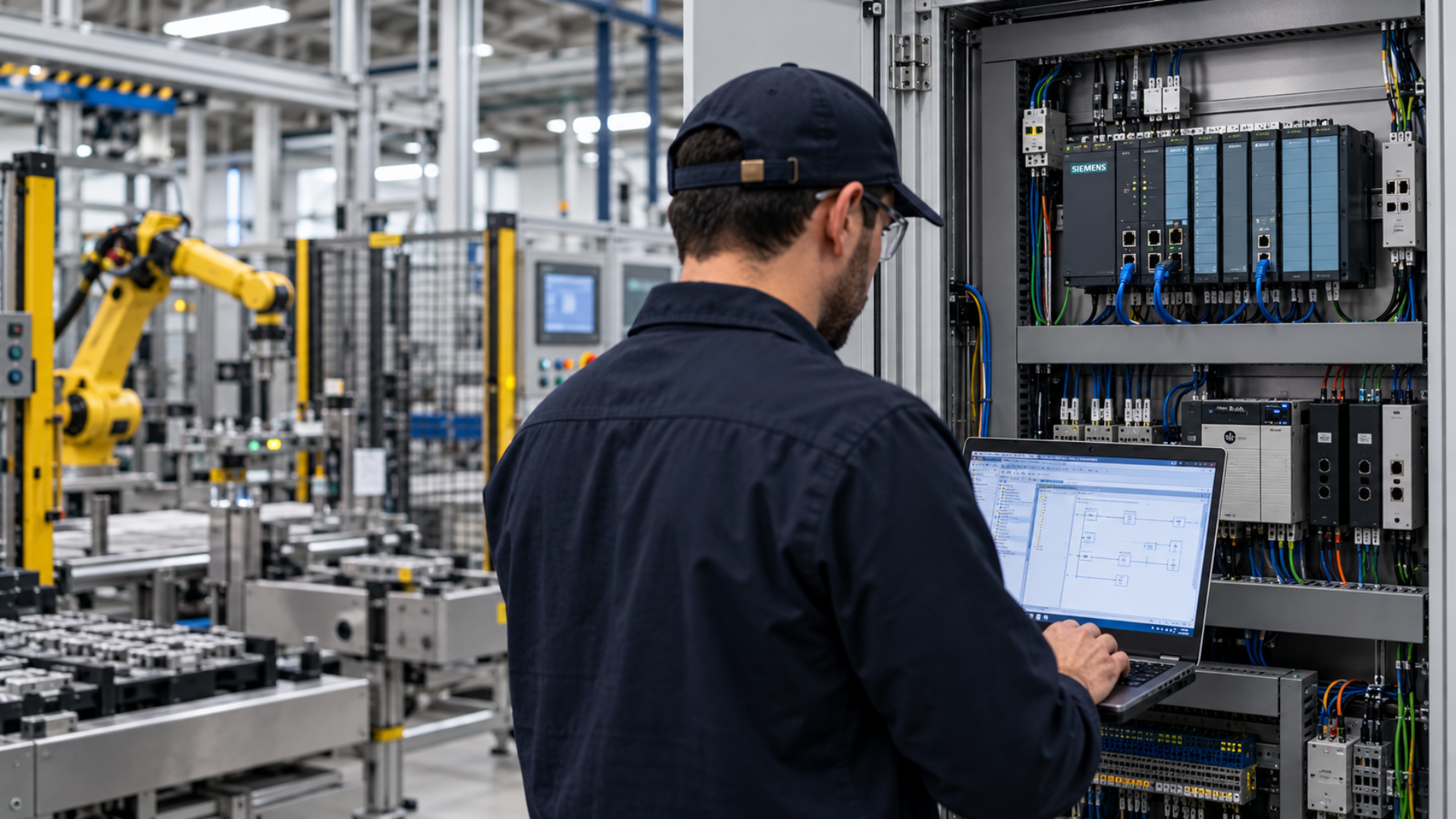

Everyone's debating whether AI PLC programming will replace engineers. We tested the tools ourselves. Discover what actually works today, where AI still falls short, and the controls engineer skills that will keep you ahead as automation evolves.