
Five Signs Your PLC Platform Is Becoming a Production Risk
Serious control problems don’t happen overnight.
By the time you realize them, your team is already keeping an ancient laptop alive just to communicate with a critical controller, and relying on the one technician who still understands decades-old logic.
What makes these situations dangerous is how normal they become. You stop noticing them as problems and start treating them as part of how the plant runs, without realizing the PLC platform has shifted from a stable asset into a growing production risk that can lead to a critical failure.
The good news is that early indicators appear well before a major event.
In this Verdusco Automation article, we share five signs that your control system may be becoming a liability to your facility.
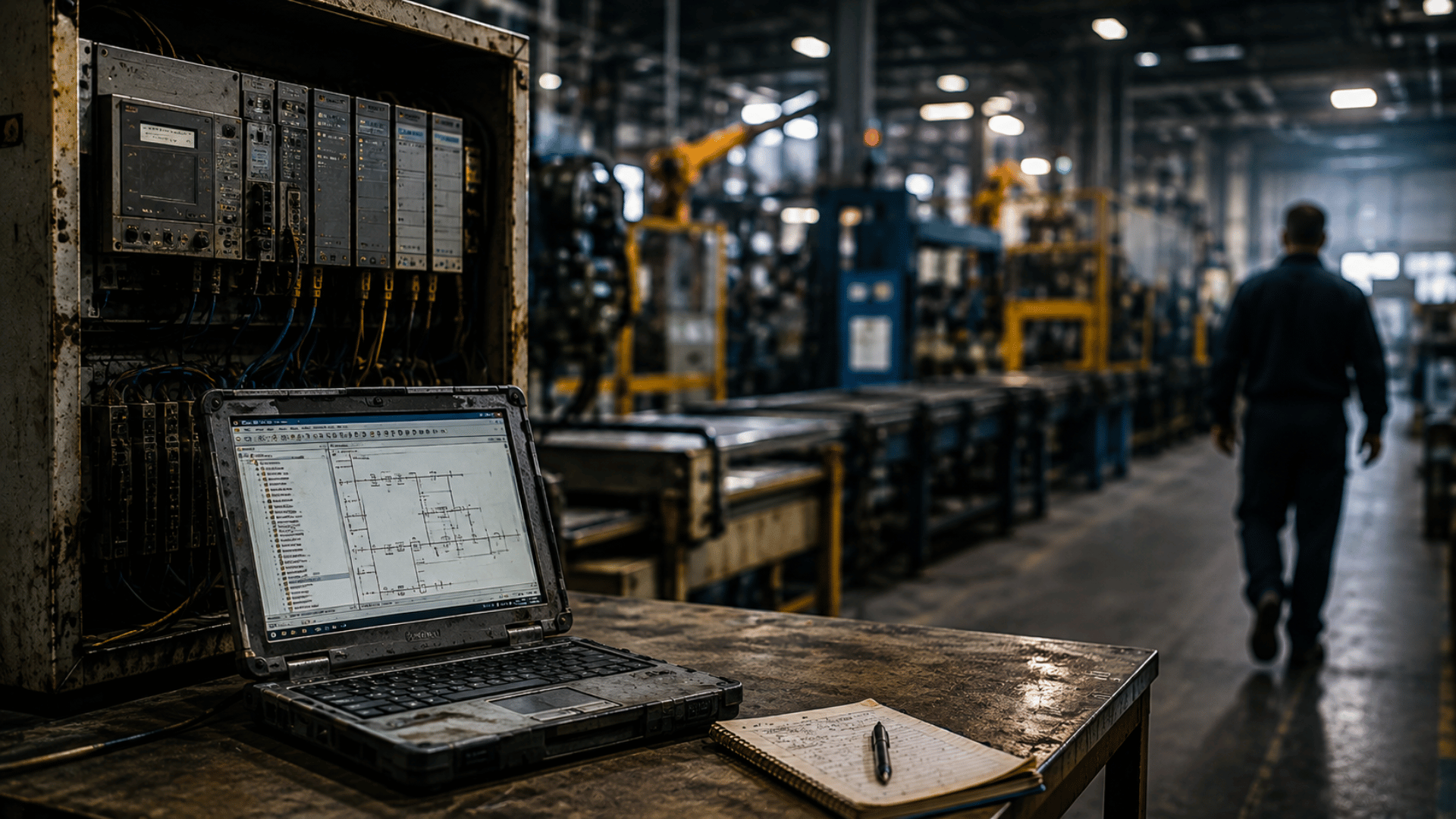
The Weight of “Good Enough”
5 Clues That Your PLC Platform Is No Longer Working in Your Favor.
1. Spare Parts Are Becoming Harder to Source for the PLC Platform
OEM parts are no longer stocked through standard channels. Maintenance teams increasingly rely on surplus markets, used/refurbished components, or long lead-time orders just to keep legacy PLC systems operational.
2. Faults Take Longer to Diagnose Inside the Control Logic
What used to be a straightforward I/O or sensor issue now requires deeper investigation into outdated or poorly documented ladder logic, often with limited visibility into how the system was originally structured.
3. Control Logic Anomalies Cause Unplanned Production Stops
Intermittent or “ghost” faults begin to surface in the control logic, creating trips, unexplained resets, or sequence interruptions that force reactive troubleshooting and unplanned shutdowns.
The line halts for a minute or two, resets, and runs again. These minor glitches are often dismissed at first, but over time they signal degrading internal components (such as aging power supplies or memory backup batteries) or unstable control behavior.
4. New Equipment Cannot Integrate With the Existing PLC Platform
Modern robotics, vision systems, sensors, and data tools do not connect directly to the control system. Every addition requires protocol converters, custom interfaces, or middleware just to make basic communication work. What should be a standard integration becomes a project on its own.
5. Programming Software and Firmware Patches Are No Longer Supported
The platform’s programming software is frozen in time. It requires outdated operating systems, struggles with modern network security protocols, and no longer receives patches for known vulnerabilities. When a logic or system issue appears, there is no clear OEM escalation path. In many cases, the original firmware engineering team has been reassigned or no longer supports the platform.
If These Signs Sound Familiar, Here’s What Comes Next for Your PLC Platform
When these five signs start showing up in your day-to-day PLC platform, temporary patches only push the real problem further down the road. Over time, you end up sourcing parts that are harder to find, running a control system that is no longer supported, and putting in more effort knowing it won’t lead to any real improvement.
Instead of shutting down the line or looking at a full overhaul, your next step is to assess thePLC platformas a whole and identify what can stay, what needs attention, and what should be replaced ASAP.
At this point, it makes sense to bring in an automation team that knows how to work with live production systems and legacy PLC setups without stopping the plant.
Verdusco Automation partners with manufacturers to:
Spot risks across their current platform,
Fix the weakest points first, and
Execute a targeted PLC upgrade in stages so production keeps running.
To take a look at your system, the first step is a simple conversation about what you’re dealing with today.
Here’s how to reach us. We’re here when you’re ready.
📩: maria@verduscoautomation.com
🌐:verduscoautomation.com/contact
___________
For more on Verdusco Automation, click here!
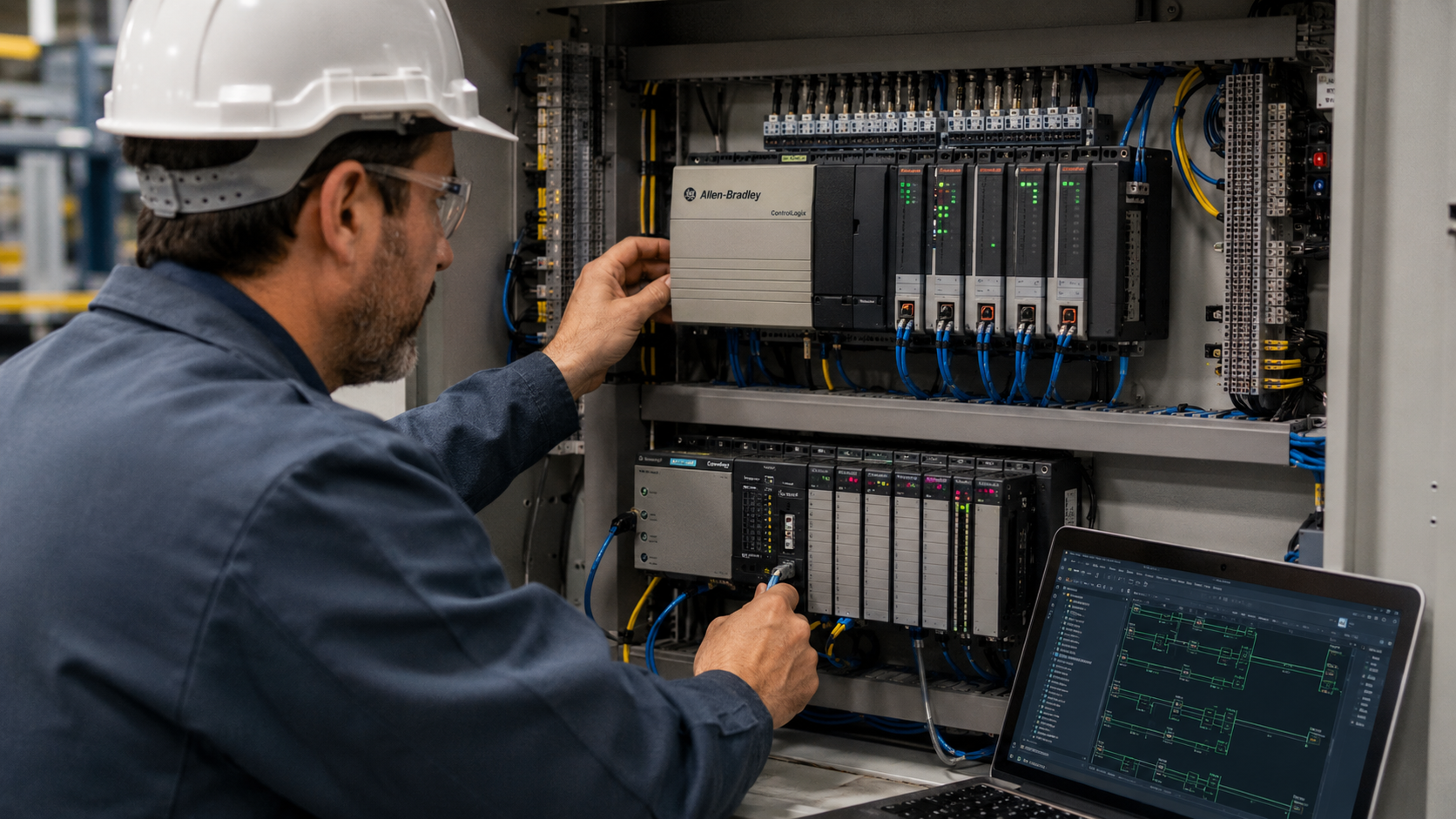


Discover five warning signs that your PLC platform is becoming a production risk, including scarce replacement parts, recurring faults, difficult troubleshooting, integration barriers, and unsupported software. Learn when a legacy PLC requires assessment, modernization, or a practical phased upgrade strategy.