
The Control System Retrofit That Keeps Old Conveyors Moving
Aging conveyors are like old trucks. They clunk, they stumble, but they’re not ready for the scrap yard.
Your plant’s decade-old conveyors are no different. The mechanical beds, heavy rollers, and support structures are built like tanks and may have years of structural life left.
What’s actually failing is the outdated brain controlling them. Rigid motor starters, worn-out switches, outdated drives, and unreliable sensors converge to turn your line into a blunt instrument, causing collisions, back-pressure, and repeated stoppages.
This Verdusco Automation article shows how a control system retrofit, built around VFD motor control for conveyors and smart sensors for line jam prevention, turns an aging belt that “kinda works” into a reliable, upgraded asset that delivers payback.

Two Essential Upgrades That Make a Conveyor Control System Retrofit Work
Instead of replacing an entire conveyor because its controls are showing their age, you can modernize how it starts, stops, senses, and moves products. The result is better control, fewer interruptions, and a stronger chance of meeting your targets with the same asset.
Take a look at the two upgrades driving this transformation:
VFD Motor Control for Conveyors
Motors started with a standard direct-on-line (DOL) starter operate like a light switch: full speed or dead stop. There’s no in-between and no finesse. Every start delivers a sharp mechanical shock, throwing cartons off balance and accelerating drive wear.
Integrating a Variable Frequency Drive (VFD) changes the dynamic entirely. A VFD acts like a smooth accelerator pedal, gradually ramping up motor speed under varying package loads and bringing the conveyor to a controlled stop.
VFD motor control for conveyors reduces line-jarring starts, preserves belt tension, lowers peak energy demand, and keeps delicate packaging more stable from one zone to the next.
Smart Sensors for Line Jam Prevention
Jam detection relying on operator checks creates blind spots that lead to damaged product.
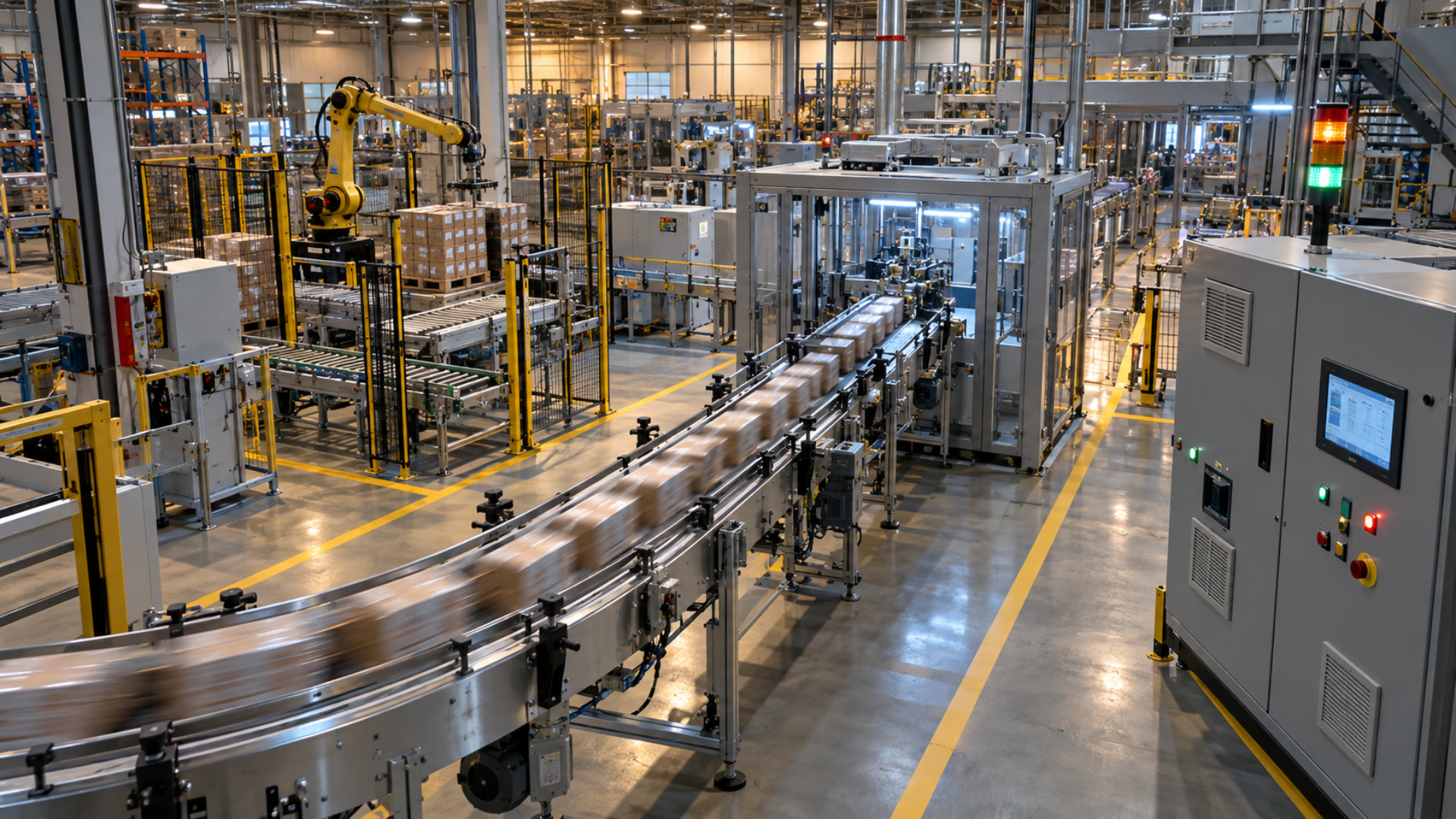
Photoelectric and ultrasonic smart sensors for line jam prevention give your line real-time situational awareness. Paired with Zero-Pressure Accumulation (ZPA) logic, conveyor zones coordinate automatically, holding packages back before contact occurs.
Deploying jam prevention sensors reduces package damage, cuts manual jam-clearing time, and keeps the line flowing with less intervention.
Now that you know what these upgrades do, let’s talk about what they actually save you.
How Powering Up a Conveyor Creates Real Savings
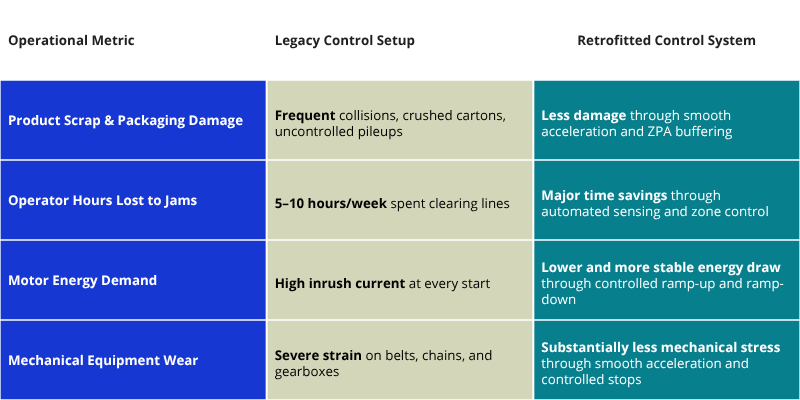
The savings from a control system retrofit often come from stopping the small losses that pile up across every shift: crushed cartons, jam-clearing downtime, hard-start maintenance calls, and back-pressure delays.
Here is what that can look like in practice:
What Is The Conveyor Upgrade Payback Period?
Retrofits cost a fraction of a new installation while delivering many of the same gains. Depending on conveyor condition, controls scope, and recovered throughput, the conveyor upgrade payback period often falls within 6–18 months. Some facilities may see a faster return.
Your Next Step to Cut Conveyor Downtime Without Replacing Lines
A proper control system retrofit can avoid the risk of heavy investments and long shutdowns. Panel builds, PLC programming, and system testing happen off-site before installation. Commissioning occurs during off-shifts or weekend windows, keeping weekday production untouched.
Why keep living with lines that are screaming for an upgrade?
Contact Verdusco Automation today. We handle the audit, panel build, and commissioning as an extension of your team.
📩: maria@verduscoautomation.com
🌐: verduscoautomation.com/contact
Note: The figures referenced in this article illustrate standard operational improvements achievable through control upgrades. A custom on-site analysis of your specific facility, line layout, and motor ratings is required for a precise ROI calculation.
More From Us: Click Here!

Aging conveyors don't always need full replacement — often the mechanical structure is sound and only the controls are outdated. Discover how a control system retrofit with VFD motor control and smart sensors can cut downtime, reduce damage, and deliver payback in months.