
3 Automation Upgrades Turning Plant Struggles Into Big Savings
Every plant manager fights the same reality:
Rising production costs.
Repetitive manual tasks eating up hours.
And small inefficiencies quietly adding up to major losses.
To top it all off, the fix is far less about working harder and more about choosing the right strategy to solve those exact bottlenecks. But with hundreds of automation options on the market, making a bad call is far too easy, locking you into endless payback periods while leaving your floor problems unsolved.
This Verdusco Automation article cuts through that uncertainty.
We break down proven automation upgrades that deliver measurable manufacturing savings, higher productivity, and a clearer path to automation ROI.
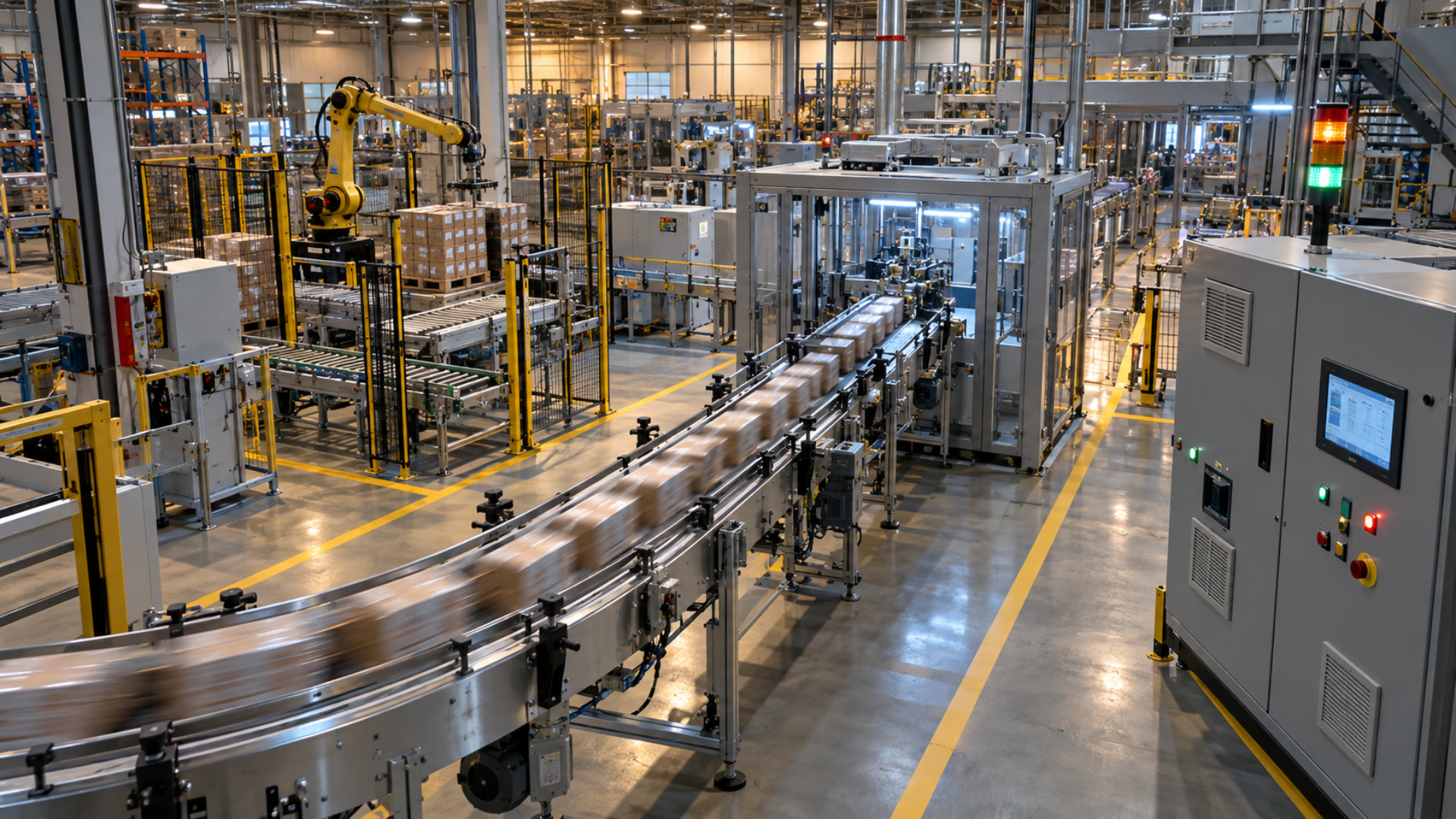
The Biggest Manufacturing Savings Don’t Come From Buying the Shiniest Technology
They come from removing the operational challenges standing between your plant and its goals. Once you do, costs fall, throughput rises, and the daily grind starts feeling manageable again.
Matching the right technology to the problem costing your plant the most is where automation ROI begins.
Here are three automation upgrades already turning plant floor struggles into manufacturing savings across mid-sized plants:
Best Automation Upgrade to Recover Production Capacity From Existing Equipment: Control System Modernization
When your equipment is capable of more, but your controls are holding it back, modern PLC/SCADA upgrades unlock the capacity sitting right on your floor.
Best For:
Older production lines, legacy PLC platforms (e.g., legacy Allen-Bradley, Siemens), and aging HMIs plagued by frequent nuisance faults, obsolete hardware, and long troubleshooting delays.
Savings Opportunities:
Recover hours of lost production by diagnosing faults in minutes: Modern HMIs pinpoint the failed sensor, drive, or I/O module on screen, eliminating the need for technicians to spend hours opening cabinets and tracing wires.
Cut extended downtime caused by hard-to-find parts with next-day replacement availability: No more paying insane rush fees to secondary brokers or waiting weeks for an obsolete part to ship from across the country. If something breaks, an authorized local distributor has the part on their shelf today.
Prevent PLC and network faults from stealing production hours: Stop losing whole shifts to ghost faults and communication drops. Modern wiring protocols and robust controllers prevent those random, unexplainable machine trips that ruin daily throughput targets.
Prolong the useful life of existing equipment without CapEx shocks: You recover the output and reliability of the line for a fraction of the investment cost, simply by upgrading the brain inside the chassis you already own.
Real-World Proof:
Modernizing legacy SCADA/PLC architecture slashes downtime and eliminates legacy maintenance headaches across high-demand processing facilities. You can check more in these success stories for a California winery (improved uptime, removed maintenance headaches, and saw fast ROI through less downtime and faster troubleshooting) and a water utility operator (achieved over $100,000 in annual savings, reaching payback in 18 months).
Key ROI Metrics to Watch:
Control-related downtime hours, Mean Time To Repair (MTTR), maintenance overtime costs, and obsolete inventory holding costs.
Best Automation Upgrade to Eliminate Small Defects Bleeding Profit: Machine Vision Systems
When manual inspection can no longer keep pace with production speeds or catch micro-flaws, smart vision systems protect your margins by verifying 100% of your output.
Best For:
High-speed packaging and regulated manufacturing where quality is non-negotiable, but manual checks are causing scrap, production slowdowns, and recall risks.
Savings Opportunities:
Cut scrap before adding value to defective parts: Catch tooling wear, mis-assemblies, and surface flaws at step one, preventing your team from machining, stamping, or painting material that will ultimately be scrapped.
Perform 100% inspection of output at full line speed with zero fatigue: Check dimensions, labels, and micro-flaws at full belt speed without the fatigue, distraction, or subjectivity that sets in during a manual shift.
Reduce recalls and customer complaints: Eliminate the nightmare of rejected shipments, expensive reclaims, and damaged client trust with verified digital logs for every part leaving your dock.
Real-World Proof:
High-speed optical inspection drastically slashes scrap rates and ensures only fully compliant products make it to shipping. You can see the impact in case studies where a medical device manufacturer increased production yield from 85% to 95%, and a window and door component manufacturer reduced production rejects to nearly zero.
Key ROI Metrics to Watch:
Scrap reduction percentage, defect capture rate (PPM), and rework labor hours.
Best Automation Upgrade to Protect Workers and Unbottle End-of-Line Capacity: Robotic Palletizing Cells
When manual stacking can't keep pace with upstream machinery, robotic palletizing turns your end-of-line into a predictable, Swiss-clock operation.
Best For:
High-volume production environments with repetitive palletizing tasks where heavy manual lifting causes end-of-line bottlenecks, high turnover, or frequent strain injuries.
Savings Opportunities
Eliminate high-cost ergonomic injuries and lost-time claims: Take the heaviest, most repetitive lifts out of human hands, lowering strain injuries, workers' comp costs, and turnover in end-of-line roles.
Prevent crushed cases and transit damage with perfect pallet patterns: Programmed, consistent stacking eliminates leaning loads, crushed product, and “fix it at the dock” surprises for your warehouse team.
Maintain continuous throughput through breaks and shift changes: Keep end-of-line running smoothly during demand spikes, meal breaks, and changeovers so upstream operations never sit idle waiting on pallets.
Free skilled operators for higher-value production tasks: Reassign your best team members from stacking boxes to setup, quality checks, and process improvement work that actually moves the plant forward.
Real-World Proof:
Robotic palletizing cells convert chaotic end-of-line packaging into a steady, automated flow. You can learn more about their impact in these case studies, where a beverage manufacturer improved end-of-line efficiency within an 8’ x 9’ footprint, and a coffee manufacturer increased production throughput by 15%.
Key ROI Metrics to Watch:
End-of-line throughput (Cases Per Minute), ergonomic injury & workers’ comp costs, and packaging line labor allocation.
Spotting Automation Upgrades Is 30% of the Equation. Execution Is the Rest
Making sure the automation upgrades are designed, installed, and supported so they actually deliver the expected manufacturing savings and automation ROI requires:
Mapping the real process (not the brochure version).
Programming for your actual mix and changeovers.
Training your team so the system sticks after go‑live.
That’s where Verdusco Automation comes in.
We give Tier 2 and Tier 3 manufacturers the dedicated engineering bandwidth needed to turn proven technology into stable, repeatable P&L gains.
Ready to see what these upgrades can recover in your facility? Let’s talk.
📩: maria@verduscoautomation.com
🌐: verduscoautomation.com/contact
_____
Article note: While real-world case studies prove what these technologies can achieve, every plant runs on unique cycle times, floor layouts, and shift structures. A custom facility analysis is required to calculate your exact ROI and project paybacks.
More from us: Click Here!
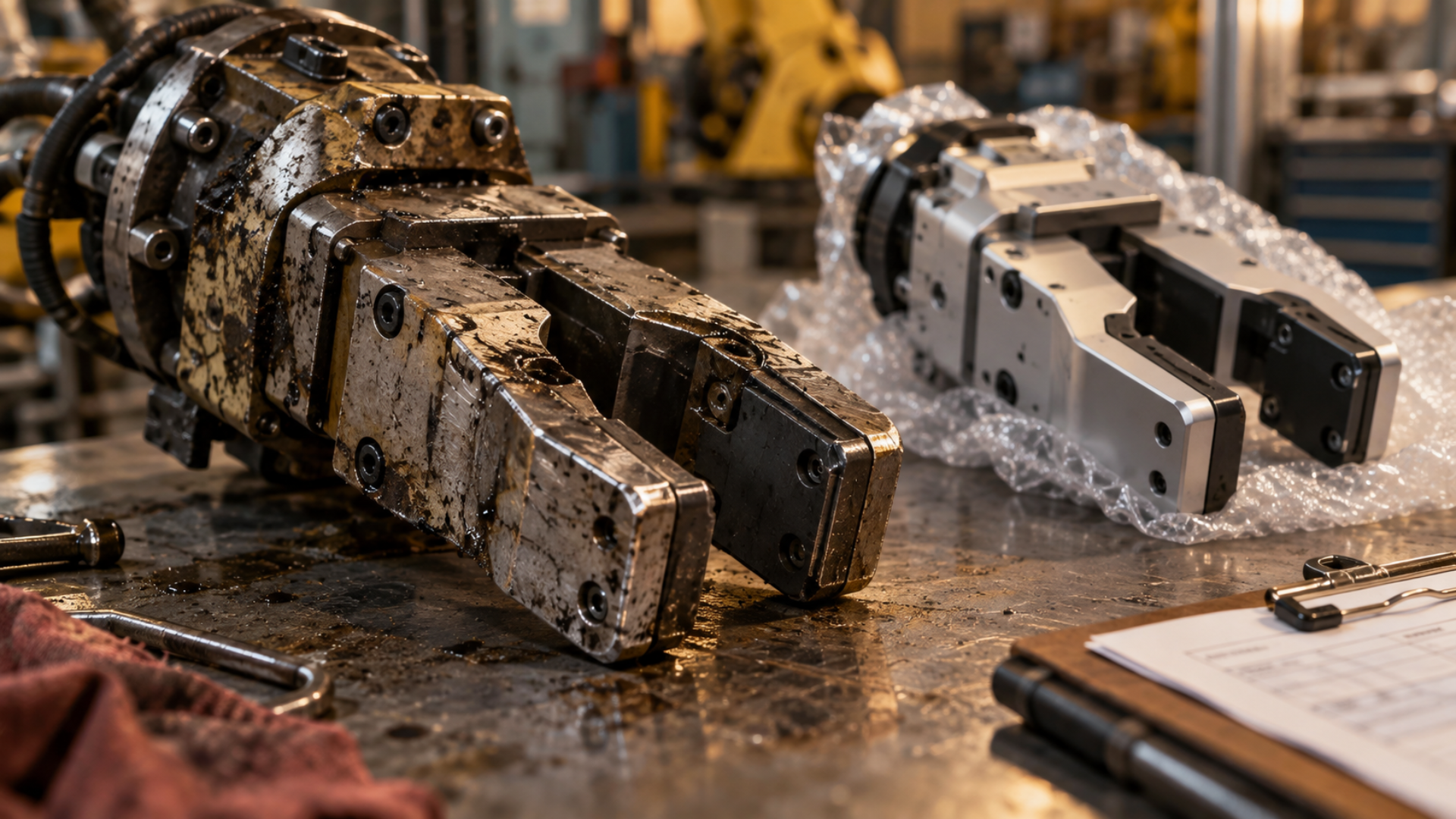


The right automation upgrades can turn recurring plant struggles into measurable manufacturing savings. Discover three proven investments - control system modernization, machine vision, and robotic palletizing - that help mid-sized plants cut downtime, scrap, and bottlenecks with clear automation ROI.