
Why Your Conveyor Proximity Sensor Keeps Flickering (Even When Nothing’s Wrong)
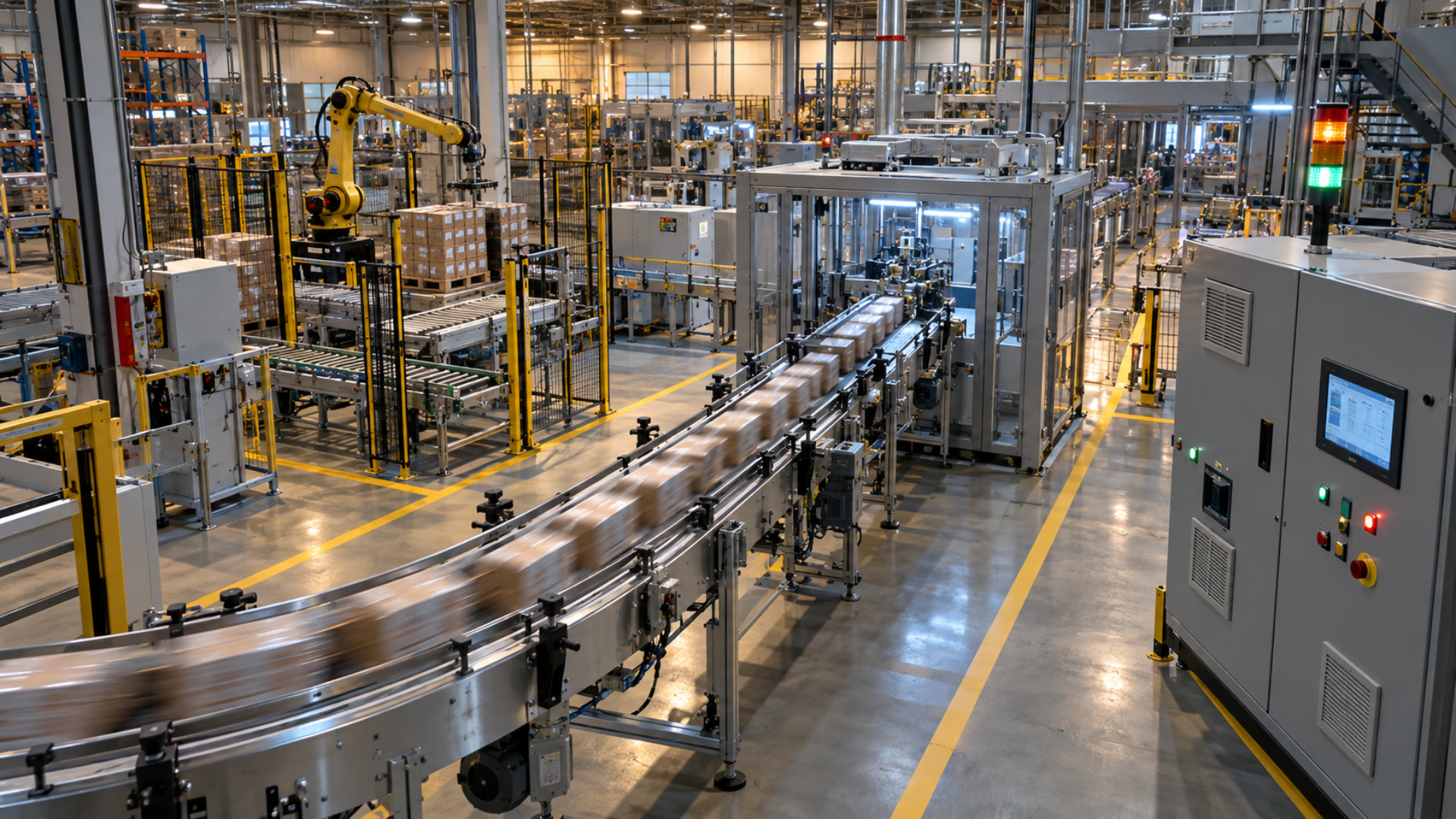
It’s 10:25 PM on a Tuesday. An “Outfeed Not Clear” alarm kills the line. Your operator walks to the conveyor, sees the part sitting exactly where it should be, and gives the sensor bracket a sharp tap. The LED turns solid, the line restarts, and five minutes later, it happens again.
This Verdusco Automation article is about why conveyor sensor flickering happens in otherwise healthy lines and how to fix it properly.

Identify the Real Causes Behind Conveyor Sensor Flickering
When a proximity sensor flickers, it’s rarely just a “bad sensor.” It’s a symptom.
Most root causes fall into four buckets:
Mechanical Drift and Micro-Vibration Conveyors vibrate. Frames flex. A thin bracket amplifies that movement. Over time, the detection gap shifts just enough to push the sensor to the edge of its range. The signal becomes marginal. Marginal signals flicker.
Electrical Signal Noise: Improper grounding. Poor cable shielding. Power and signal lines share the same tray. Variable frequency drives nearby. All of it introduces signal noise that the PLC interprets as rapid ON/OFF transitions.
Weak Detection Margin. When a proximity sensor is set right at the edge of its sensing range, any small variation can push it into instability, and the LED wavers.
Over-sensitive PLC Logic, no debounce. No hysteresis. No validation window. The PLC reacts to every millisecond of instability.
Overriding the sensor or blindly replacing hardware won’t stop the issue from reappearing. Your next step is engineering stability into the logic.
Most Conveyor Sensor Flickering Problems Can Be Corrected With Everyday Automation
Here’s how.
A. Add Debounce & Validation Logic
Program the PLC to wait 50–200 milliseconds before reacting to a state change. That small delay filters out transient signal noise and vibration spikes.
Result: Phantom trips disappear.
B. Integrate Hysteresis into Detection
Instead of switching ON and OFF at the exact same threshold, create a separation between the two states. This prevents rapid toggling when a part sits at the detection edge.
Result: No more ON/OFF chatter.
C. Monitor Signal Strength (Not Just On/Off)
Modern sensors can provide diagnostic data. Expose weak signal conditions to the HMI:
“Sensor drift detected.”
“Low detection margin.”
“Bracket vibration above threshold.”
Now maintenance sees degradation before failure.
D. Use Redundant Voting at Critical Points
Install two sensors where uptime is critical. If Sensor A flickers but Sensor B is solid, the PLC trusts the stable input.
Result: One unstable device doesn’t stop production.
E. Stabilize the Mounting Strategy
These are four must-dos:
Reinforce the brackets.
Create isolation from vibration sources.
Define torque specs during PM.
Ensure cable strain relief.
The same LED that once trembled now burns steady. No alarms haunt you throughout the shift. And operators stop tiptoeing around the sensor and start trusting it again.
The Payoff Behind the Fix
Imagine a single outfeed conveyor feeding a manual packing station, a labeller, a pallet cell, or even an AMR pickup zone. The conveyor moves 300 units per hour. Each unit contributes $4 in margin. That’s $1,200 per hour supported by a single conveyor.
Conveyor sensor flickering creates 4 micro-stops per hour. Each one lasts about 30 seconds.
If you lose 2 minutes/hour over an 8‑hour shift, that’s 32 minutes/day across two shifts.
At $1,200 per hour, 32 minutes ≈ $640 per day.
Over 20 production days ≈ $12,800 per month from one conveyor.
Have more conveyors? Have more lines?
You’re easily into five figures monthly losses, caused by detection instability and signal noise.
Engineering your way out through automation is definitely worth it.
Build a Line You Can Trust
Here’s a fact most plants don’t track: micro-stops under one minute often consume more production time than major breakdowns. They just hide better.
You don’t need a full line replacement. You need stability engineering.
At Verdusco Automation, we help manufacturers in food & beverage, pharmaceutical, defence, automotive, and logistics facilities design lines that don’t need babysitting.
We support that mission through:
Control Systems for Industrial Automation: PLC optimization, debounce logic design, sensor validation, and noise mitigation.
Integrated Automation Solutions: Mechanical redesign of mounting strategies, redundancy design, and system-wide diagnostics integration.
Industrial Automation Platform Development: Role-based dashboards that show sensor health, signal degradation, and predictive maintenance indicators.
We also integrate robotics and AMRs when material flow instability extends beyond sensing. But we start with fundamentals: stable signals, reliable interlocks, and clean data.
Our solutions are practical. Affordable. Designed for manufacturers who are tired of systems that “kinda work.”
If this article feels familiar, your line is ready for its next chapter.
Contact Verdusco Automation today!
📩: maria@verduscoautomation.com
🌐:www.verduscoautomation.com/contact
_____
Final Note: This article illustrates what’s achievable. A precise ROI requires a facility-specific assessment of your conveyor design, grounding, logic structure, and detection margins. The good news? The fixes are usually simpler than expected.
And once the flicker is gone, trust returns to the floor.

Aging conveyors don't always need full replacement — often the mechanical structure is sound and only the controls are outdated. Discover how a control system retrofit with VFD motor control and smart sensors can cut downtime, reduce damage, and deliver payback in months.