
Why New Automation Gear Tanked Your Output – Part I
Identifying What Really Went Wrong
The vendor’s demo looked flawless.
Faster throughput. Less downtime. Cleaner reporting. ROI in months.
Leadership approved the investment. Once the paperwork cleared, the collaborative robots (cobots) and autonomous mobile robots (AMRs) were deployed on your floor.
A few days in, output has slipped, production has become less predictable, and operators are busier troubleshooting than producing.
This Verdusco Automation article explains why that happens and what your next course of action should be.

Did New Automation Just Make the Operations Worse?
For many facilities, the answer is yes. But the problem is not the new gear itself. The real issue is ‘innovation friction,' a.k.a. the clash that occurs when modern automation is dropped into a plant built on older systems, controls, and communication infrastructure.
Innovation friction is where automation projects lose momentum. Instead of delivering gains, teams get stuck with delayed signals, disconnected robotics, and dashboard mismatches nobody can explain. Once those problems stack up, the entire operation becomes unstable:
Output drops. Operators spend their shifts resetting cobots after changeovers, locating AMRs, or verifying conditions the SCADA system should be monitoring.
Downtime soars. Alarms trigger at the wrong time, legacy PLCs miss critical signals, and maintenance teams waste valuable minutes figuring out if the problem is electrical, mechanical, or communication-related.
Visibility breaks down. Operators report one issue. The dashboard shows another. Leadership receives completely different numbers during production meetings.
Why Innovation Friction Happens
Most manufacturers do not build entirely new facilities when adding new gear. They layer modern automation onto aging infrastructure. The catch is that legacy systems were never designed to work seamlessly with:
AMRs,
cobots,
IIoT devices,
real-time dashboards,
or modern SCADA communication.
So even if the robot performs well on its own, production stumbles when the rest of the plant cannot communicate with it. Behind this performance plunge, you’ll usually find a cluster of new automation, PLC, and SCADA integration mistakes.
Identifying Where New Automation, PLC, and SCADA Integration Went Wrong
Small, invisible integration failures collide at the worst possible moment: under real load, with real operators, real scan rates, and real constraints. Here are the failure points we see most often:
Legacy hardware limitations: Older PLCs and RTUs were built for local control, not high‑speed IIoT traffic. A new device pushes updates every 50 ms. The legacy PLC refreshes every 500 ms. It simply can’t keep up.
Vendor omission (no protocol translation): The robot speaks MQTT. Your PLC speaks Modbus RTU over serial. Without a translation layer, data never reaches the legacy system.
Site constraints discovered too late: The new machine needs Ethernet and a clean network infrastructure. The plant still runs aging copper lines, unmanaged switches, and overloaded panels. Intermittent red alarms follow.
Lack of centralized communication strategy: There’s no communication architecture. Robot vendors, electricians, controls teams, and IT all manage separate pieces of the project.
Missing or undocumented tag databases: Without proper tag mapping, the system can’t identify key variables, fault states, or sensor values.
Security restrictions blocking communication: Devices connect, disconnect, and reconnect because IT closed “unused” ports for security.
SCADA added after installation: New automation arrives first. Centralized visibility gets added later under pressure. By then, data silos and manual workarounds are already baked into daily operations.
Protect Yourself Against New Automation, PLC, and SCADA Integration Mistakes
Start with clear specs.
A simple “must communicate with existing systems” line is not enough. Define:
tag mapping,
scan rates,
fault logic,
protocol responsibilities,
and communication architecture.
If not, you’ll end up with frozen screens, junk values, and manual logs.
Next, work with an automation partner who understands these challenges and can support you through the entire integration process.
Verdusco Automation works in this space every day. We turn disconnected equipment into reliable output.
Contact us today for a no-cost line review chance.
📩: maria@verduscoautomation.com
🌐:verduscoautomation.com/contact
_____
Note: This is only the first layer of the problem. In Part II, we’ll break down the practical steps to stabilize your line and show you how to turn these fixes into a clear, defensible ROI story your leadership will understand.
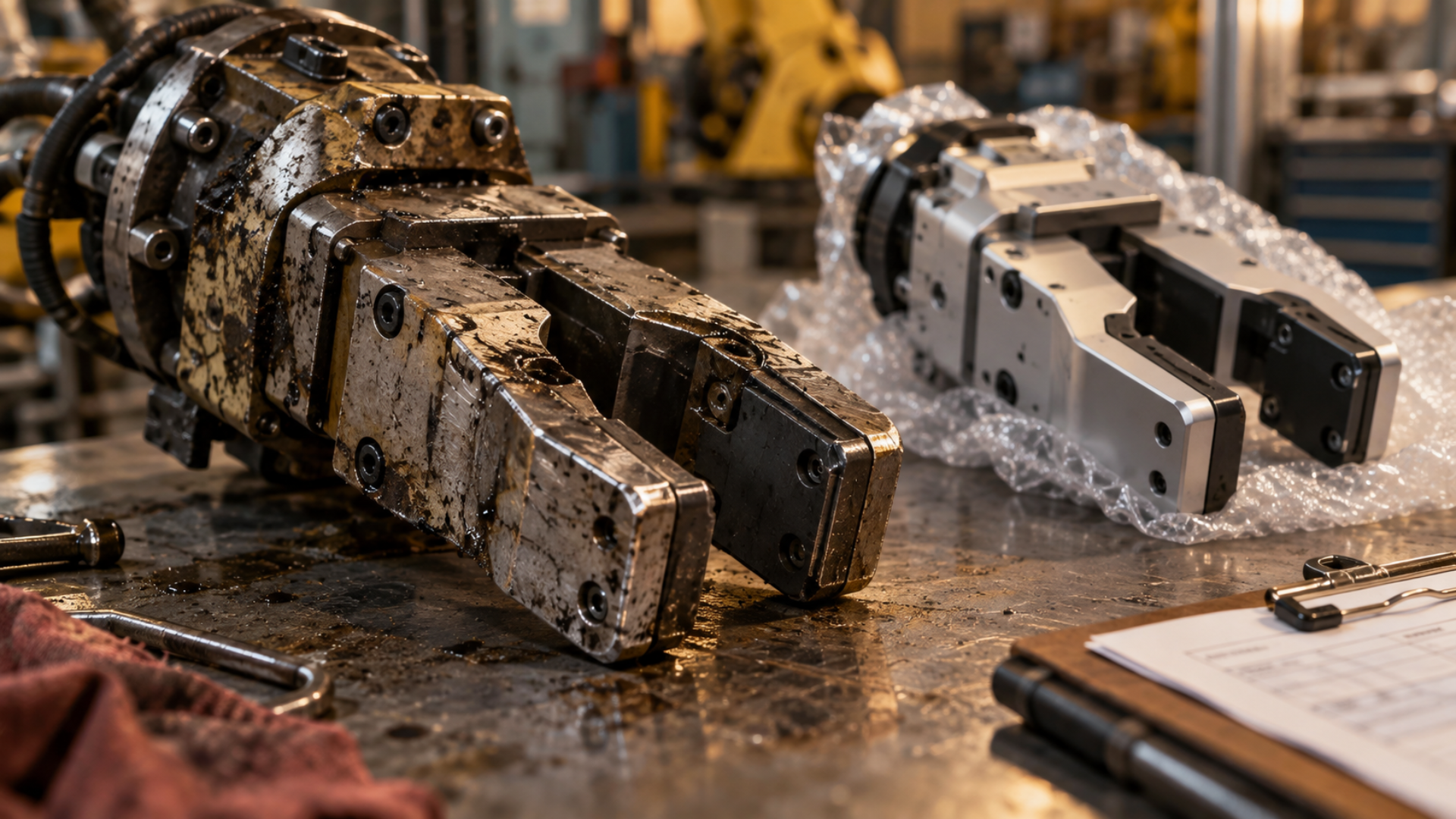


The right automation upgrades can turn recurring plant struggles into measurable manufacturing savings. Discover three proven investments - control system modernization, machine vision, and robotic palletizing - that help mid-sized plants cut downtime, scrap, and bottlenecks with clear automation ROI.