
David sits at his desk with a rare opportunity:
His first green light to automate the shop floor.
He knows small factory automation can unlock much-needed capacity, but with dozens of aging machines and a tight CapEx budget, where does he actually start?
This Verdusco Automation article empowers the Davids of the world to see where automation for small manufacturers can deliver low-risk and high-return wins for their projects and facilities.
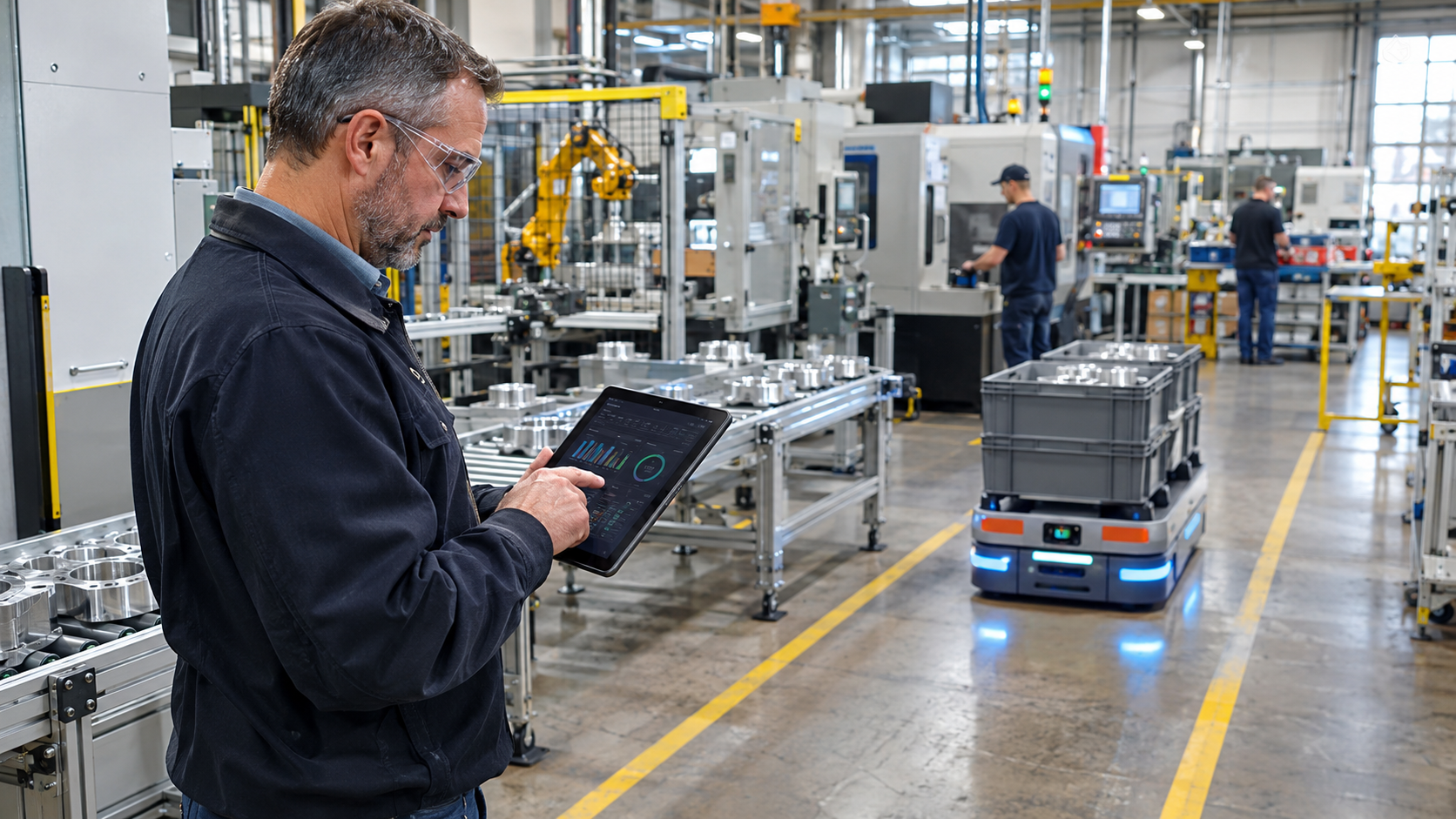
Find the Problems Costing You Every Day
The biggest mistake is trying to transform everything at once. You do not need a complete digital overhaul to fix a recurring bottleneck. In fact, it’s in your best interest to start small, target high-frequency pain points, and build quick wins.
Here’s how it goes:
Before you look at automation equipment, walk the floor.
Where does work pile up?
Where do operators wait? Where does material sit between processes? Which machine keeps going down? Where are people spending time on work that adds little value?
What comes up is a list of potential projects to dig into and narrow down.
A pain point worth pursuing should pass three tests:
It happens often. A problem that costs you every shift deserves more attention than one that appears twice a year.
It is measurable. If you can’t put a number on the problem, it will be difficult to build a business case for fixing it.
It is stable enough to improve. If the process changes every day, automation may not be the first fix. Stabilize it first. Then see whether automation can remove the recurring loss.
Once you’ve identified a pain point that passes all three tests, you have a credible candidate for your automation project.
Define Your Automation Project Scope
Manual handoffs, heavy repetitive lifting, or legacy equipment causing frequent unplanned stops are common small manufacturing automation projects. The high-return entry points often include:
Targeted controls retrofits: Replacing an obsolete panel with a modern and targeted PLC upgrade for small manufacturers restores reliability on 20-year-old conveyors, filling stations, and packing systems without buying new.
Streamlined material transport: Deploying material handling automation, such as compact automated carts or autonomous mobile robots (AMRs), eliminates manual forklift runs and keeps parts moving smoothly between workstations.
In a real production environment, you find these kind of scenarios:
Suppose a production team spends two hours each shift moving components between stations. Elsewhere in the plant, an aging PLC glitches once every quarter, causing 20 minutes of downtime.
At first glance, the PLC issue may seem like the bigger problem. It involves production downtime and an aging control system that could become harder to support.
But look closer.
The PLC glitch happens once every quarter or less. Meanwhile the two hours spent moving components happen every shift, adding up to overtime, delayed orders, operators pulled away from productive work, and lower throughput.
Compare Recovery Opportunities by ROI
Let’s say you settled on the two hours spent moving components as your first small factory automation project. What follows next?
First, define the value you want to recover. Maybe you want to reduce those two hours of material movement to 30 minutes or less, lower delayed orders by 8%, and so on.
Next, look at what material handling automation solutions are available to help you get there. Tested technologies such as automated carts, autonomous mobile robots (AMRs), or automated guided vehicles (AGVs) might pop up in your research. Each solution will deliver its own manufacturing automation benefits and recover a different fraction of the value you are currently losing.
One solution might eliminate the delay altogether. Another might reduce it to 80 minutes. A third might land somewhere in between. The goal at this stage is to understand what each option can deliver.
Finally, compare the value you could recover at the facility with the total manufacturing automation cost of each option:
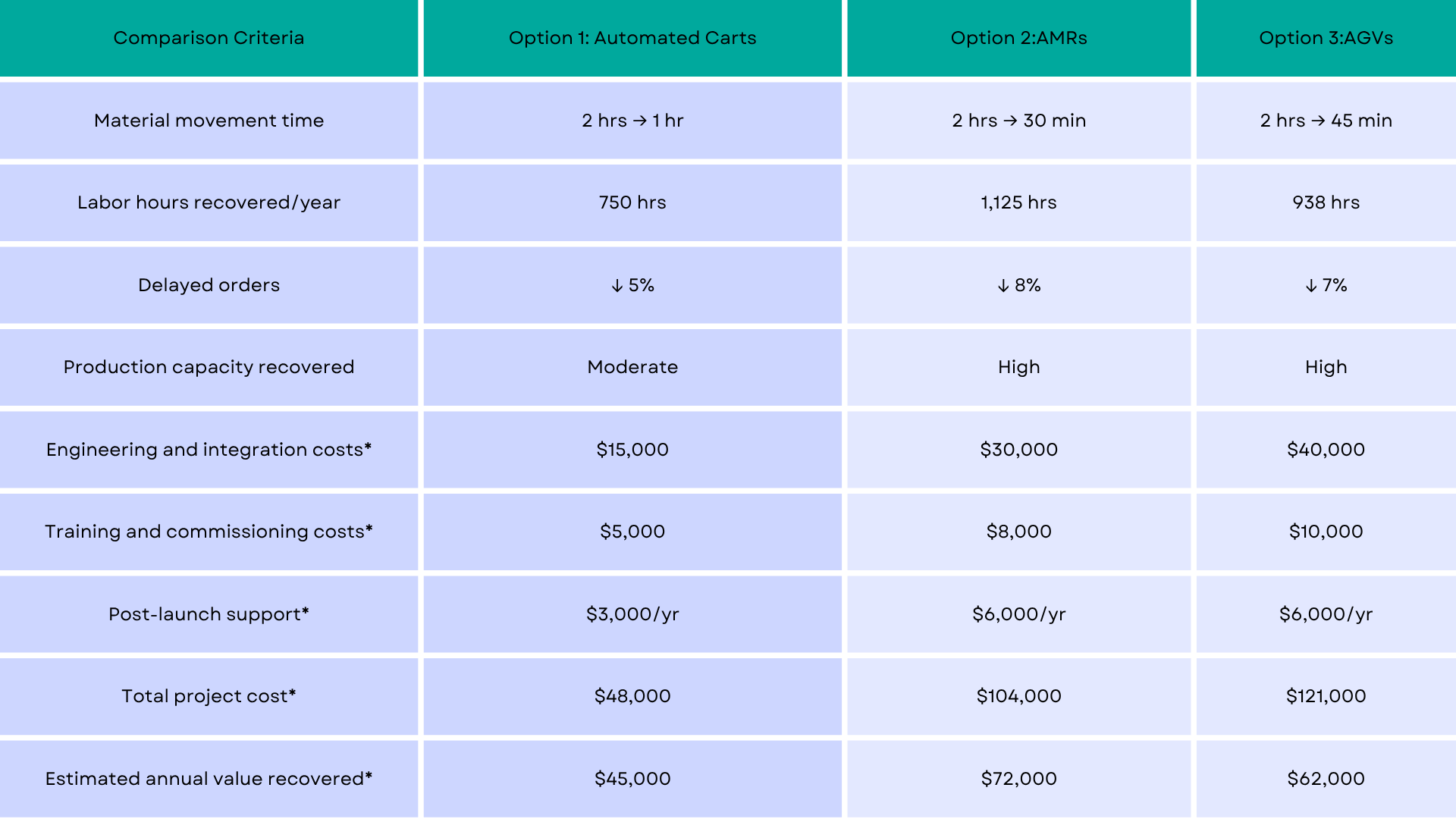
Illustrative estimates for article purposes, not a vendor quotation or guaranteed result.
From there, automation ROI for small business becomes easier to calculate and assess. You’ll find that a $48,000 solution recovering $45,000 a year is a very different proposition from a $104,000 solution that recovers $72,000.
Bottom line: Choose the solution that offers the strongest return without creating unacceptable risks.
Put Your Small Factory Automation Project Into Action
Automation for small manufacturers is no longer an out-of-reach gamble. It is a reliable strategy for growth. Still, the fear of ending up with a botched installation, an unexpected line stoppage, or an overhaul that drags on for months is as real as ever.
The good news? You don’t have to take it on alone, nor do you need to juggle separate consultants, equipment suppliers, electrical installers, and software programmers.
The safest path to complete your project and see real manufacturing automation benefits is a phased, single-source approach that meets your facility where it is today. This is where a partner like Verdusco Automation comes in.
We take the weight off your shoulders by:
Evaluating opportunities;
Stabilizing legacy control systems;
Modernizing PLC/HMI platforms;
And designing automation around the equipment and processes already on the floor.
Ready to Find the Right Small Factory Automation Project for Your Plant?
Contact Verdusco Automation Today:
📩: maria@verduscoautomation.com
🌐: verduscoautomation.com/contact
More from us here.
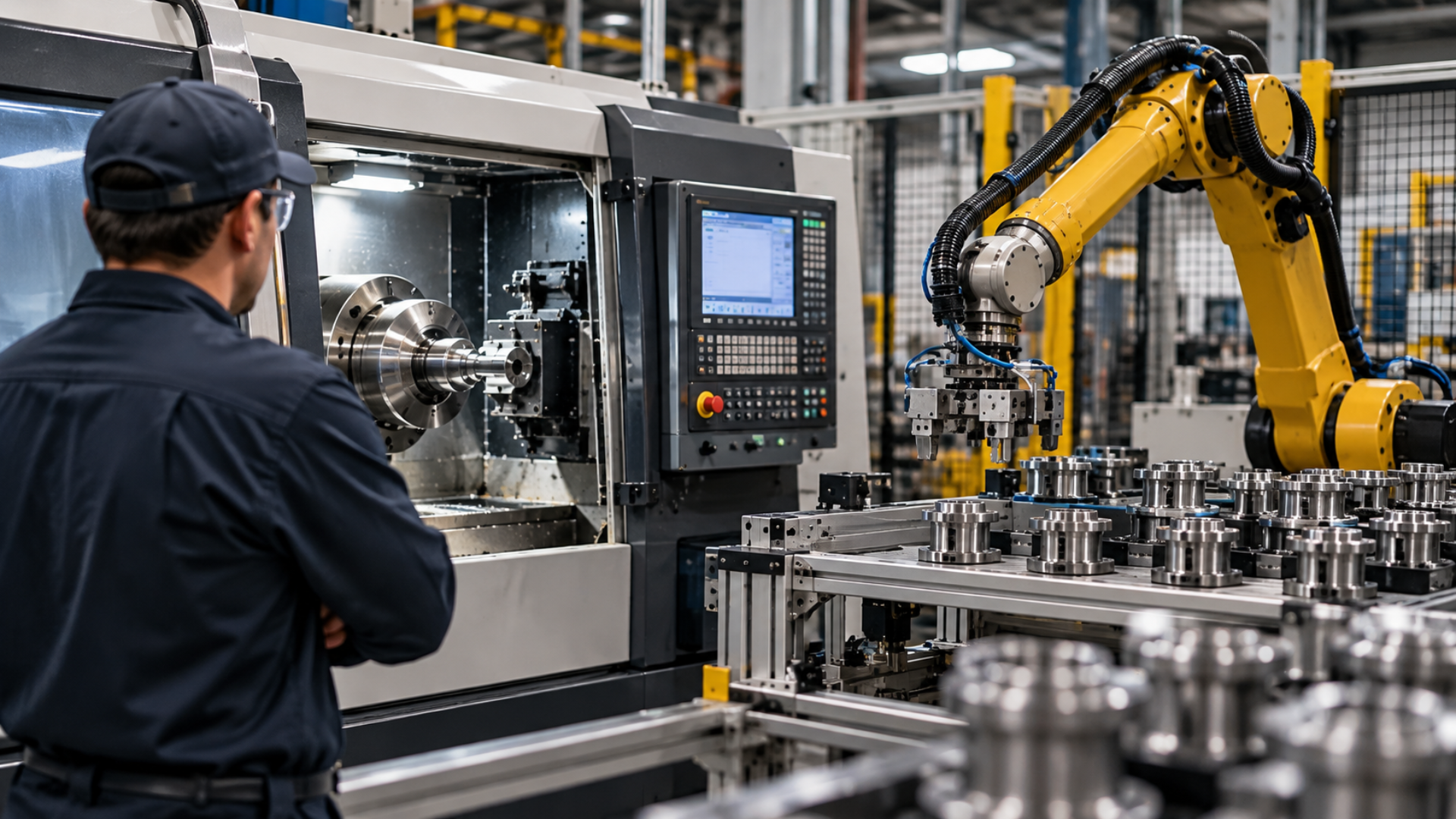
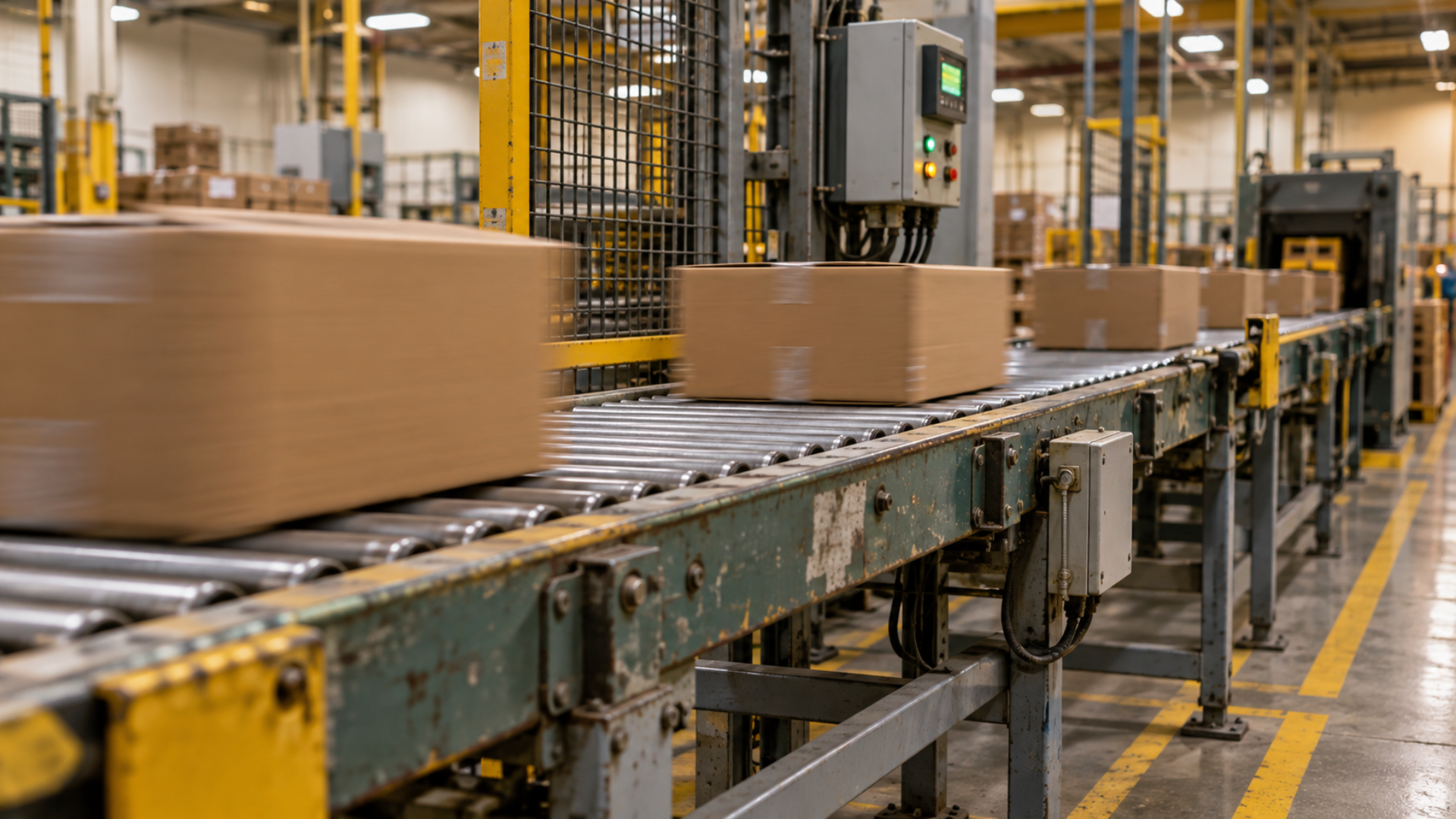

Small manufacturers can achieve stronger automation ROI by identifying costly production bottlenecks, prioritizing practical upgrades, and comparing solutions that improve efficiency, reduce downtime, and maximize long-term operational value.